A large-scale photograph is more than just an image; it’s an immersive experience utilizing surface, sheen, backdrop, or gesture. In constructed photography, images are deliberately crafted through planning, fabrication, lighting, and direction to tell a story. This is exemplified in the Orlando Museum of Art’s exhibition “David LaChapelle: As The World Turns”, which features 167 LaChapelle works, his largest U.S. retrospective. Viewers get a front-row seat to the theater that is David LaChapelle’s photography.

Why Photographs Sometimes Need a Stage
Some photographs begin with a camera and end with a print. Constructed photography starts earlier. A crew prepares a set, builds the scene, and waits for magic to happen. When you find yourself in front of a completed work in the gallery, you can sense it: the hard work, the painted wall, the props, the carefully constructed, yet alive feel of the scene.
That ‘constructed, yet alive’ feel is critical because it changes the way you look at the image. You no longer ask “What did the camera see?” You begin to think, “What did the artist make?” LaChapelle’s photographs are part of this theatrical, constructed tradition. They pulse with performance yet are rigorously constructed. In David LaChapelle: As The World Turns, OMA asks you to examine the construction, then take that knowledge into the galleries.
Conceptualizing the World: From Mood Boards to Sketches
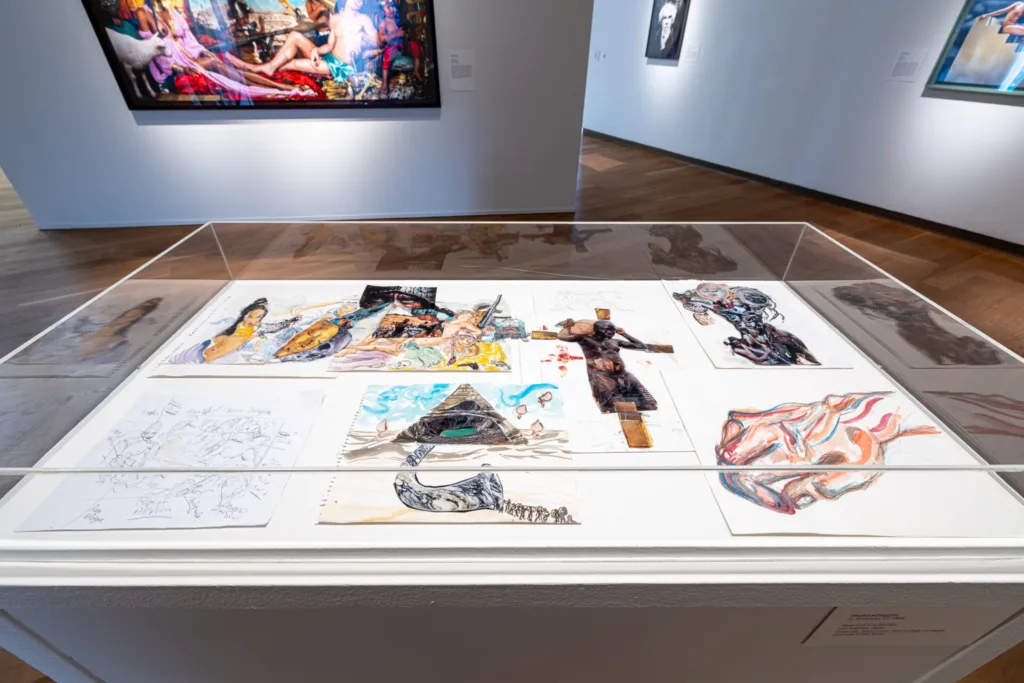
A constructed photo begins with the unseen choices before the camera even enters the picture. The color story, the cultural references, the scene’s temperature, and that of its feelings are all decided before anyone raises a wall or places a prop. There are mood boards. There are sketches. There are tests of the space and the eye.
In LaChapelle’s scenes, the preparation pays off. These are tableaux that seem like stories interrupted. There is a structure and organization to the disarray. The planning sketches signal what the set should say, what clues it should offer, and what unresolved drama should be lodged in the image. When the camera arrives, it is all there.
Building the World: Materials, Scale, and Fabrication
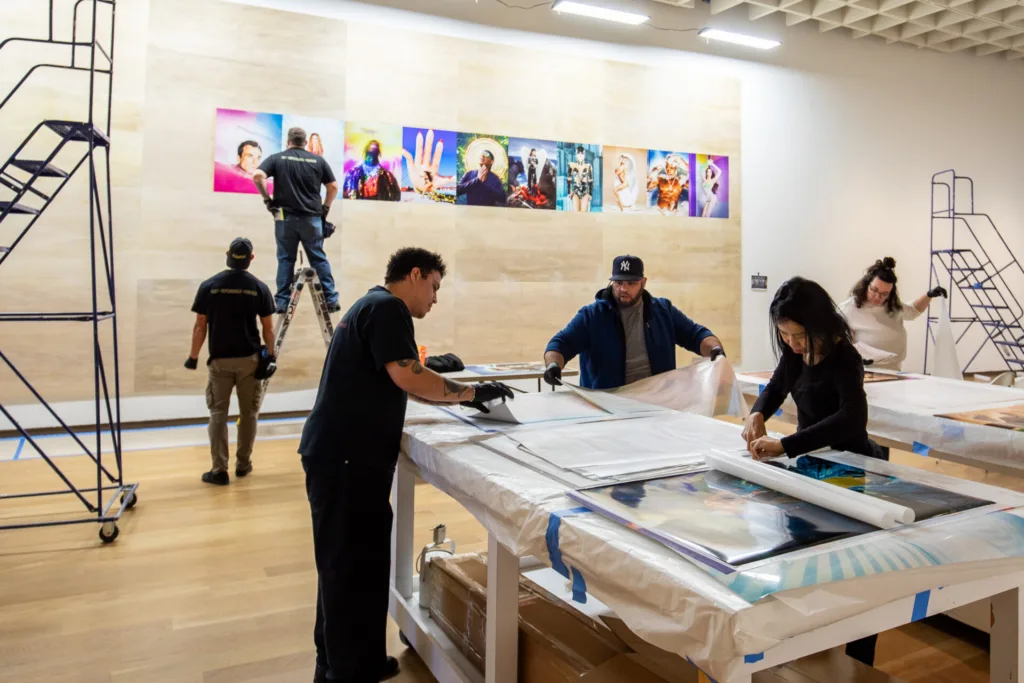
A constructed set takes many forms. Some are tabletop scenes. Some are room-sized, built to human scale so the subject can move through it like an actor on a stage. Building these takes carpenters, painters, prop stylists, and sculptors, all of whom consider functional aspects that enhance the illusion.
Although LaChapelle’s work feels larger than life, his art never uses AI and is almost entirely constructed in-camera, with physical props. He utilizes his 3 studios across the U.S. to create the sets for his works with enough room to create an unlimited landscape of imagination.
The scale is part of the story. A small set is a tiny world, limited and contained. A room-sized one has its own universe behind it, with depth, texture, and heft. In both cases, though, the set carries meaning. The finish, material, and density of detail convey its reality.
OMA’s retrospective showcases instances where entire environments were built for the shoot. This matters when you see it in person because the prints show evidence of this construction. You may start to see where the paint meets the light, where a prop ends at the edge of the frame, or where the world continues beyond what you expected.
“The curation emphasizes LaChapelle’s highly constructed process. Regardless of size, each photograph is presented as a complete production, carefully staged, lit, and composed, reflecting the narrative and visual storytelling that link both his photography and filmmaking practice.” – Chief Curator Coralie Claeysen-Gleyzon
Light as Architecture: How Illumination Builds Meaning
In constructed photography, light is not an afterthought. Light is part of the construction from the beginning. It prepares your eye, directing it to different details, and makes certain aspects feel soft or hard, sacred or surreal. The same set can feel tranquil under warm light and tense under cool light. Shadows can create dimension or flatten a scene.
Think of light as a building. Brights can create “edges” in the frame as your eye flows from face to hand to object to background. Highlights can give a reflection on a flat surface of a second image. A glow can make a scene feel outside of time.
In many LaChapelle photographs, light itself is a material. You can see surfaces that shine and take bright highlights, colors that glow, and illumination that suggests a set was lit just for you. Once you see these choices, the image becomes a constructed space instead of a spontaneously captured moment.
Choreography: Movement, Timing, and Human Energy
A built set still needs human energy to activate it. Bodies move around in space, even in a static image. Gesture, posture, balance, and eyeline all have energy. A hand can be an assertion or a refusal. A head can tilt the power in the scene. A body can stand grounded or off-balance, and you pick those signals up quickly.
LaChapelle often directs sitters like actors or dancers. David’s experience as a director of film and video helps him set the subject as a performer in a constructed universe. The set provides the cues, the pose provides the tension. That’s one reason these images can have the feel of a moment in a narrative.
Sound can influence that timing, too. On many photo sets, a soundtrack plays to establish tempo, give the subject a beat, and set a mood in the room. Even when you cannot hear it, you can sometimes feel its effects in the final print, a gesture that seems timed, a gaze that seems held, or a body that looks prepared to move.
The Decision: Selecting the Frame That Holds It All Together
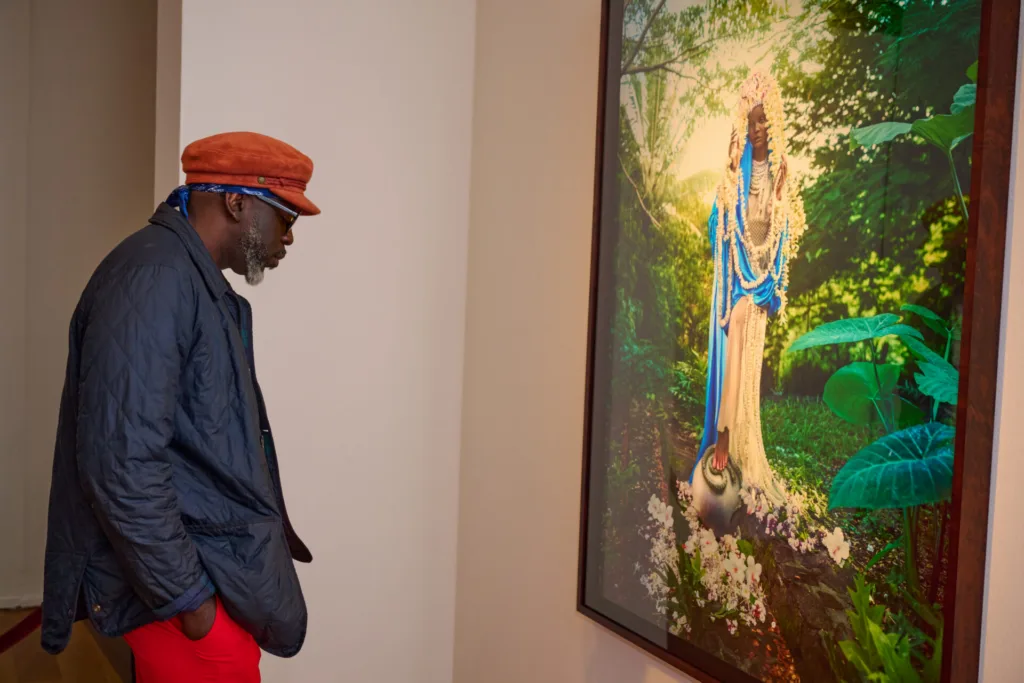
A stage photograph isn’t found in a single click. There’s exploration, slight variations in stance, angle, distance, and timing. Many frames can be “good.” Only one frame has the job of holding the whole production, the set, the light, the performance, and the story in one clear moment.
It’s partly craft and partly instinct. The right frame feels complete. It holds the motion without losing it. It holds the set without overwhelming the subject. It holds the action’s tension but remains legible.
Coralie Claeysen-Gleyzon, Chief Curator at the Orlando Museum of Art, explains how the exhibition layout emphasizes LaChapelle’s work. “Spatially, scale was a key consideration, as so much of David’s work is bold and visually striking.”
“Playing on the intensity of the works, the flow will bring intimate early portraits, such as Andy Warhol’s, and some of David’s preparatory sketches, alongside vivid celebrity photographs and large-scale allegorical tableaus, including a world-premiere piece newly commissioned for a gallery in Milan. This contrast is intentional, encouraging visitors to move between intimate details and visually dramatic works,” Coralie said.
Through hand-painted negatives, film-based media, and behind-the-scenes footage, we see the depth of intention, imagination, and resourcefulness that go into every photograph. There is a story behind each image, and this exhibition invites viewers to slow down and discover it.
How This Enhances the Visitor Experience at OMA
When you know a photograph is built, you come in with different questions. You start looking at edges, textures, surfaces, and light. You notice what looks handmade and what looks engineered. You know the subject is not just a person in front of a camera but rather a performer in a scene.
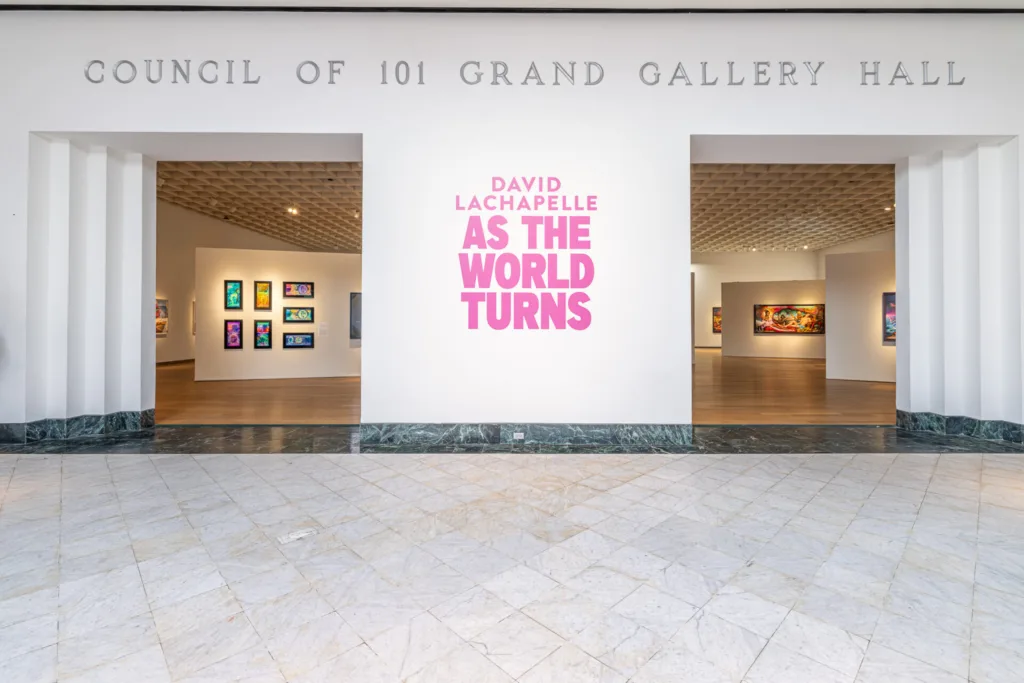
That approach works for David LaChapelle: As The World Turns at OMA. The exhibition is the largest U.S. retrospective of his career and presented as a thematically curated selection of the artist’s work, allowing pieces from different periods to coexist. Scale, too, comes into play, bridging closer, more intimate portrait work with the large, splashy tableaux.
Spend time with the work. Get up close and follow the details that the set designer left for you. Get some distance and take it all in like you’re at a show. Change your perspective, and the image changes what it gives you.
To get ready for your visit to OMA, browse the exhibition page for David LaChapelle: As The World Turns, then check out tickets and membership options. You can also visit the events page for programming and experiences connected to the exhibition throughout the Orlando Museum of Art.