

Written By: Coralie Claeysen-Gleyzon
“This is here. This is Florida.” These words opened my conversation with Carlton Ward Jr. about the images in this exhibition. Simple but insistent, they capture something at the heart of Ward’s work: a desire to make Florida visible by revealing the landscapes, wildlife, and connections that are all around us, yet can so easily go unseen. As an
acclaimed National Geographic photographer and explorer, Ward has spent decades documenting and protecting Florida.
Early in his career and throughout his life, Ward recognized that his photographs of Florida’s natural beauty, particularly those of “Exotic Florida,” were often mistaken for faraway places. People frequently assumed such landscapes belonged in Africa, Montana, or elsewhere, rather than realizing that this remarkable beauty existed right here in Florida, on our own doorstep. Beyond reveling in that beauty, Ward has sought to create a visual record, to bear witness to what is too often unseen, and to the many stories still waiting to be told. The vistas in this exhibition are hidden in plain sight; none of these sites are more than 200 miles from the museum, yet they remain suspended in the collective imaginary as visions of an idealized beauty, when in fact they are unmistakably Floridian landscapes of our times.
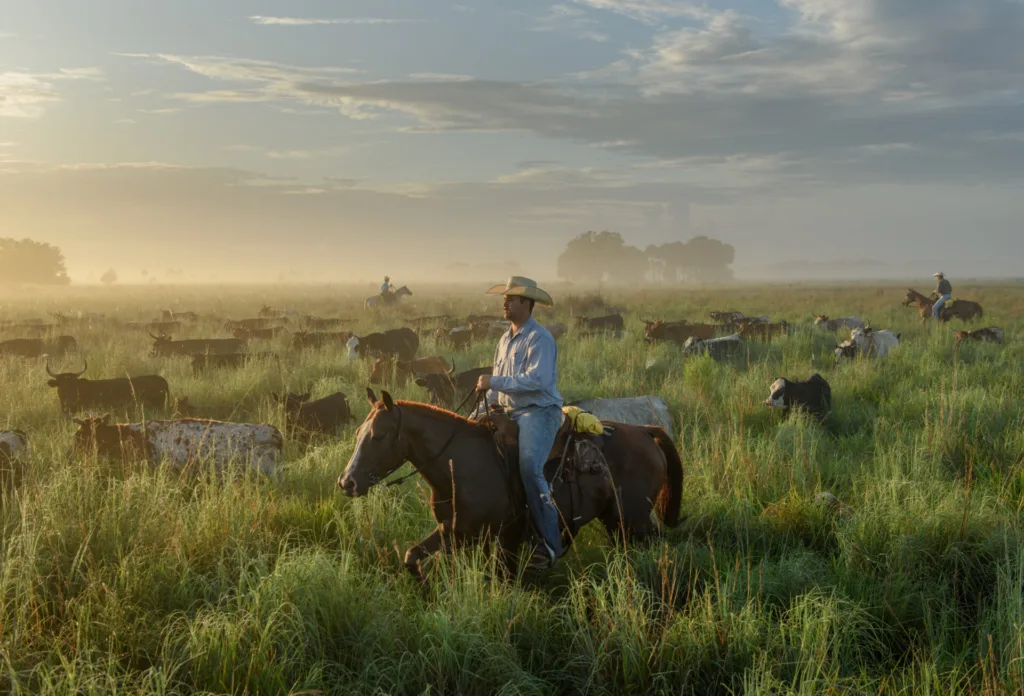
Ward’s first Florida project focused on Florida cowboys: overlooked and forgotten, yet still here. He later earned international acclaim for his award-winning work on preserving the Florida panther, another rare sight. Through these images, Ward encourages us to see, remember, and take action. Florida’s nature is not a relic of the past, but a living heritage expressed throughout the land, waiting to be preserved and protected before it is too late. There is still time to experience and cherish its raw beauty, but awareness is lacking. In Ward’s lifetime alone, Florida’s population has grown dramatically, from about 8.5 million residents in 1975 to almost three times that number today. This extraordinary growth has placed increasing strain on the environment, and nature has moved further from the front of our minds. Ward’s work reconnects the fragments, bringing attention to “the Florida we don’t see” in order to help save it. Protecting these places starts with awareness.
A poetic thread flows throughout the exhibition, interwoven with these images and Ward’s practice in Florida: the connected themes of land and water. The story of the land cannot be separated from the story of water. Aquifers, watersheds, ranchlands, the Everglades, lakes, rivers, swamps, and springs are all a part of the same narrative. Carlton Ward Jr.’s images reveal both interconnectedness and interconnectivity, a bond that is at once philosophical, ecological, and physical in our experience of the landscape.
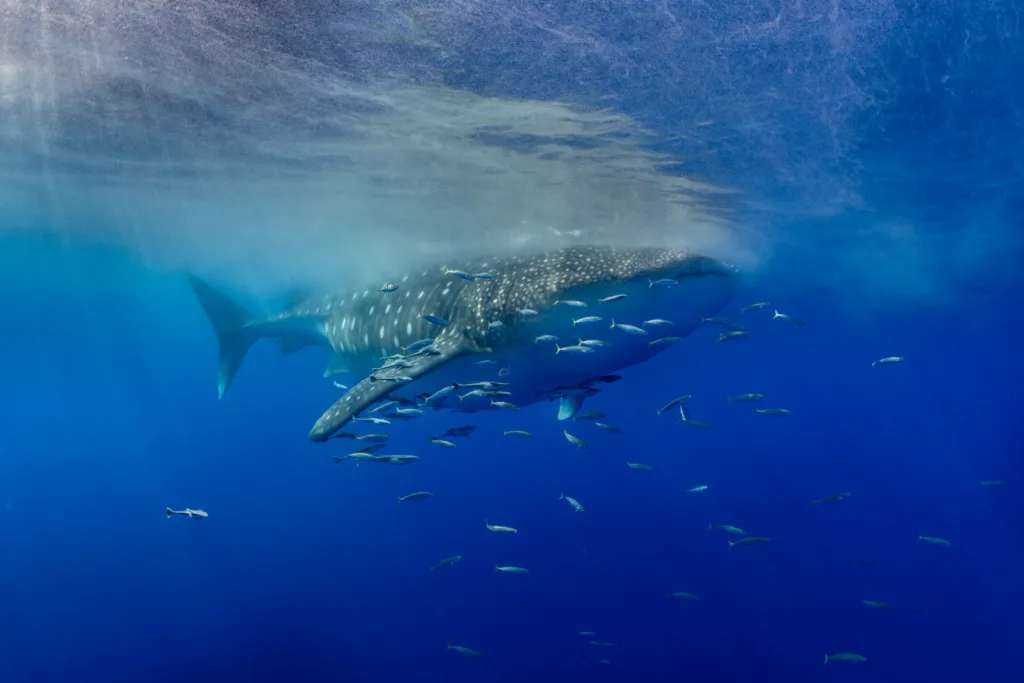
For the past 20 years, Ward has devoted his work to doing just that. Motivated to preserve and reconnect the Florida Wildlife Corridor, he named that landscape and founded Wildpath and the Florida Wildlife Corridor Foundation to inspire the protection of these irreplaceable ecosystems. Perhaps the greatest impact of his work is the unifying story he has worked so tirelessly to tell: that everything is united into a recognized geography. Over the years, as he documented and physically connected the landscape, he realized he was also connecting people: the caretakers of our Floridian lands. Whether they live within these landscapes or make decisions about them, everyone has a part to play in shaping the future of these lands. The work of caring for them is never finished; it begins again, each day, with each of us.
For more information about Wildpath and how you can play your part in Florida conservation, please visit
wildpath.com and see more of Carlton’s work at carltonward.com.
We invite you to experience this journey for yourself. Wild Path is the largest exhibition of Carlton Ward Jr.’s career to date, bringing together twenty years of work into a single, connected story, one that asks us to look closely at what surrounds us and to recognize our own role in protecting it. Walking through these galleries is an invitation to see Florida anew: to trace the threads between land and water, past and present, and to carry that awareness home with you. We hope you will join us and see, as Ward does, that this is here. This is Florida.
