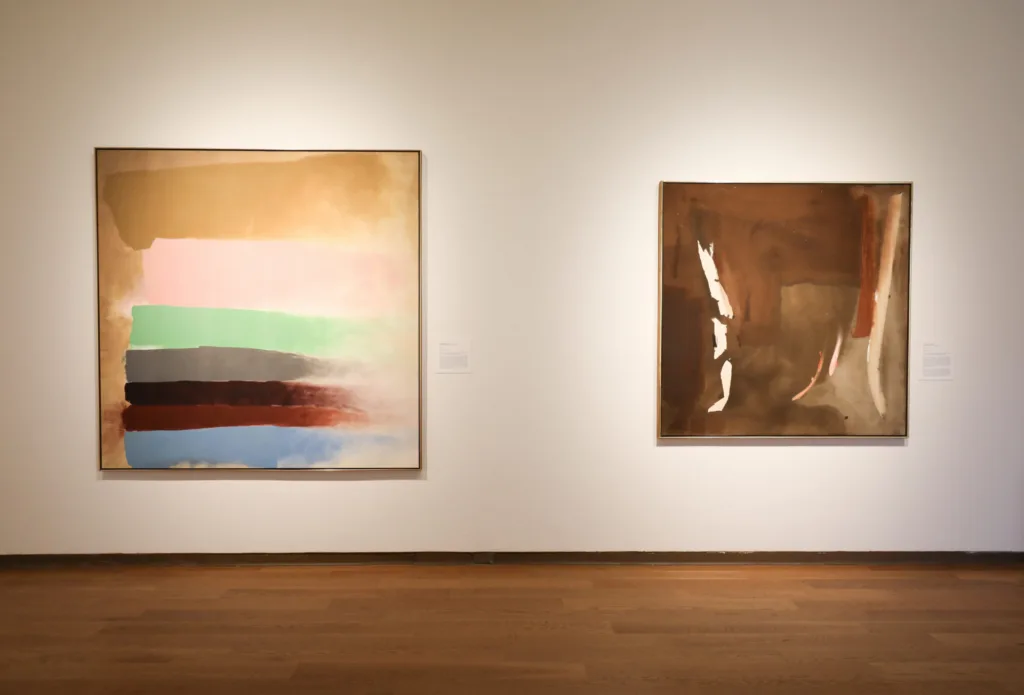
Standing in front of an abstract painting for the first time, most visitors feel some version of the same thing: uncertainty. The work doesn’t look like anything recognizable, and without a subject to anchor the experience, it’s easy to wonder whether there’s something about the abstract art meaning that you’re supposed to understand. Most of the time, there isn’t. In many cases, abstract art doesn’t ask for your comprehension or analysis; it’s asking for your attention and curiosity.
So what is abstract art? At its simplest, abstract art moves away from traditional subjects. Where a landscape painting uses color and line to describe a field or a mountain, abstract art uses color and line as its subject. The paint isn’t pointing to or depicting somewhere or something else. The paint and technique are the focus.
This guide to abstract art for beginners is for anyone who has felt uncertain about how to look at it, what to pay attention to, and why it matters.
What Is Abstract Art?
When you walk into a gallery of abstract paintings, you won’t see houses or people or landscapes you may otherwise naturally gravitate to. You’re given windows into a different world: the world of the painting itself. The colors, lines, forms, and textures are the subjects, and their importance becomes the decisions behind them.
The elements of abstract art exist on a spectrum. At one end sits semi-abstraction: you can still make out a figure or a landscape, but it’s been simplified, fragmented, or pulled toward something more elemental. At the other is pure non-objective abstraction, where no reference to the visible world exists at all. Mark Rothko’s large color fields aren’t trying to replicate filtered sunsets. Their color, scale, and light are direct experiences, independent of any one reference.
What you’re actually looking at in any abstract painting is a series of deliberate choices: how much of the canvas a color occupies, the feelings the colors and shapes evoke, and the changes they make in texture.
A Short History of Abstract Art
Abstract art developed as a response to traditional art and a question that rang in the minds of famous abstract artists who saw the world differently: Does art have to represent the visible world?
Early 20th-century artists Wassily Kandinsky and Piet Mondrian gave famously different answers. Kandinsky believed color and form could carry emotional weight without a subject. He experienced synesthesia, a neurological condition that causes the brain to associate colors with sounds, which made his early canvases dynamic and full of color, built from impulses that felt more like music than illustration.
Mondrian moved toward the opposite extreme, reducing his compositions to intersecting lines, primary colors, and the white intervals between them. If Kandinsky’s paintings felt like a full symphony, Mondrian’s felt like jazz.
By mid-century, Abstract Expressionism began to explore the physicality of abstract art. Jackson Pollock’s poured-and-dripped canvases recorded every movement of his body as he painted. Mark Rothko’s soft, layered color rectangles tend to reveal more once you’ve spent time with them.
While your first reaction to one of Rothko’s paintings might be to feel uneasy or wonder whether it’s meant to portray anything of importance, in 1943, Rothko wrote the New York Times, saying, “There is no such thing as good painting about nothing,” inviting the viewer to examine their own emotions as the painting’s subject.
Later generations refined and stripped back those experiments. Color Field painters like Helen Frankenthaler worked with poured and stained color that seemed to spill out from within the canvas. Minimalists like Agnes Martin and Donald Judd removed gesture entirely, creating precise works that elicit a meditative reflection on stillness and perfection.
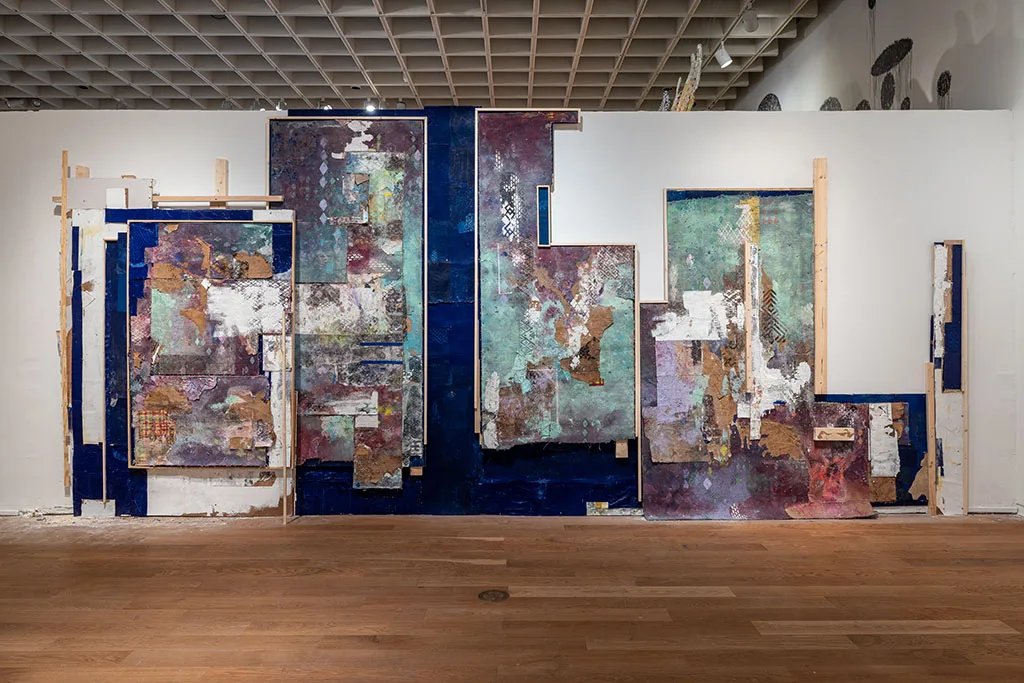
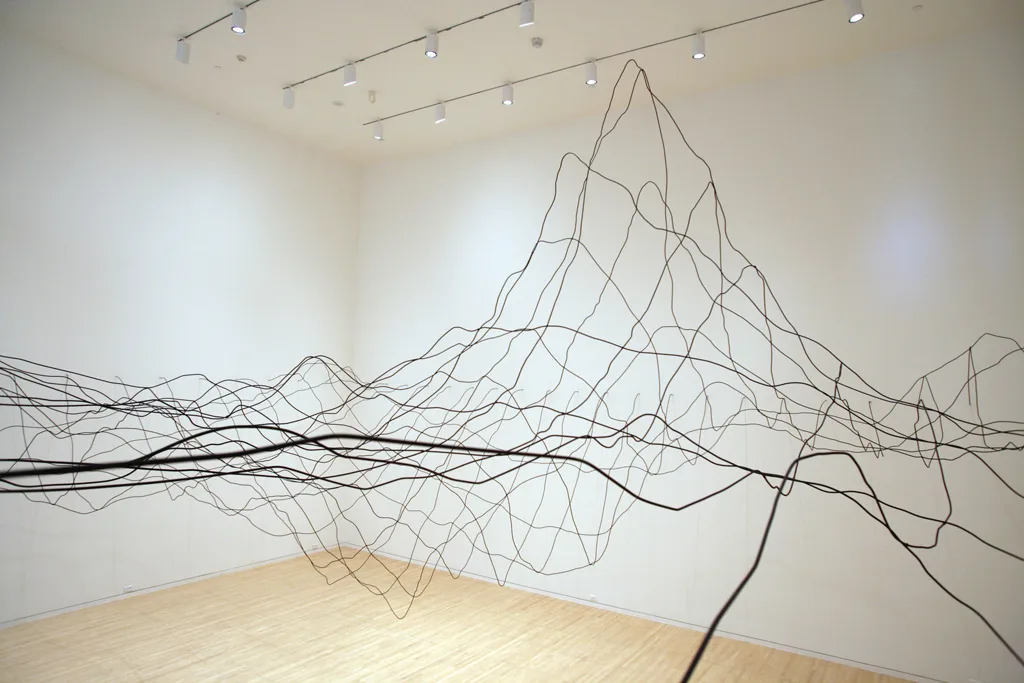
Contemporary abstract art continues all of these conversations. OMA’s Florida Prize regularly features artists working in the abstract, such as 2025 Florida Prize winner Nathalie Alfonso, whose large-scale gestural drawings made directly onto gallery walls call back to the Abstract Expressionist period, and Troy Simmons, who exposes bright and surprising shapes as he deconstructs the idea of rigid urban construction.
Types of Abstract Art
Knowing the different types of abstract art can help you know more about the art you’re looking at and tell you a lot about what to look for.
Geometric abstraction: Mondrian is one of the key artists in this area, but geometric abstraction runs through hard-edge painting, Op Art, and many examples of contemporary graphic-influenced work. One of the underlying principles is structure, so you’ll see clean edges and sharp, precise brushwork without much blending or feathering. In the negative space, between colored areas, you can recognize the intent of where the artist wants you to focus.
Gestural and expressive abstraction: Brushstrokes, drips, and splatters show you exactly how it was painted. The thickness across the surface tells you the speed, pressure, and time the artist spent on each area. Pollock and Willem de Kooning are known for their work in this area, but it’s present in a huge range of contemporary painting, such as the works at OMA by Robert Rauschenberg, who moved from pure abstract art into Pop Art.
Color Field painting: Large areas of color, often with soft or stained edges. After some time, you’ll notice where the colors originate. They will blend and pool in unexpected ways. Frankenthaler’s poured surfaces feel atmospheric, almost like weather. Does the color emanate from within the surface or sit on top of it? Notice how the color’s temperature and weight affect the piece’s feeling.
Minimalism: Agnes Martin’s pencil grids and Donald Judd’s stacked metal boxes are examples of minimalism, where the art challenges the viewer to reflect on either the machine-like process or the tranquility of the final work. Minimalism is about asking yourself what you bring to the art.
Contemporary abstract art: Many of today’s contemporary abstract artists embrace movement and variation, not just in technique but in media. Artists move between painting, installation, fiber, and digital media. In any type of abstract art, learn to look at how the material informs the work. Why did the artist choose this medium? For example, part of understanding watercolor art is learning how artists use light and transparency in ways that other paint techniques don’t offer.
How to Look at Abstract Art
Learning how to appreciate art when visiting a museum is a different experience for everyone. Here are a few quick tips for how to interpret art and what you should be thinking about.
Notice what stops you first. Before you read the label or any wall text, pay attention to what caught your eye: the size of the piece, a color, a shape, or the texture of the surface. The first thing that pulls you in is intentional. It’s the first thing to think about before examining the rest of the piece.
Get close, then step back. Abstract work often behaves differently at different distances. Close up, you can see details of the surface, such as built-up paint, brush marks, and the physical energy the artist used to create. From further away, you can see the picture as a whole, and you can appreciate how every small detail resolves into rhythm, weight, or mood.
Ask “how was this made?” instead of “what does it mean?” In abstract art, it’s often more important to pay attention to the artist’s technique than their intention, though one usually informs the other. Was the paint poured or dripped? How delicate or frenetic was each motion? Each part of the painting was a physical decision by the artist, and what’s left behind tells you how it was made.
Your response is part of the meaning. If a painting feels calm, unsettled, spacious, or heavy, that’s part of the artist’s intention. Abstract art is especially good at producing responses that resist description. You don’t need to be able to explain what you’re feeling for it to be part of how you appreciate the art. Let yourself sit with those emotions, and you’ll begin to understand the purpose of the piece.
Don’t read the wall text until you’ve spent time viewing. The description on the wall can inform how you interpret the art or pull your eye in a way that it wouldn’t naturally. Form your own impression first. Then you can read the title, artist’s statement, and date to add context to the impression you’ve already made.
Why Abstract Art Matters
Why is abstract art important? It expanded what art could be. Before abstraction, Western art was largely understood as representation — a method of recording the visible world. Abstraction went against the mold and dared to ask whether art could portray something intangible. What if color, line, and form could communicate something directly, without pointing at anything else?
Abstract art gives artists a language to portray emotions and sensations in a new way. It also teaches us to recognize how we feel as part of the art. Without a recognizable subject, the focus of the art becomes your response in that moment.
Spend some time with the next piece of abstract art that you see. Let it stop you in your tracks and examine how it makes you feel. Once you’ve done that, you’ll understand the importance of abstract art.
Explore the current exhibitions at OMA to see abstract art in person and practice the ways you can better appreciate it.
Plan your visit to see what’s on view, or become a member for early access to exhibitions and events year-round.
Abstract Art: Frequently Asked Questions
What is abstract art in simple terms?
Abstract art is art that doesn’t represent recognizable objects or scenes from the visible world. Instead, it uses color, shape, line, form, and texture as the primary subject. It ranges from semi-abstraction, which distorts or simplifies real subjects, to pure non-objective work with no reference to the visible world.
What makes abstract art good?
Abstract art is good when the artist makes deliberate choices that produce a genuine experience for the viewer. The feelings produced by the art are part of the art’s meaning, even when that means the absence of feeling. When you think about what makes abstract art good, ask yourself, did the artist’s decisions directly influence how this artwork is affecting me?
How is abstract art different from modern art?
“Modern art” refers to a historical period — roughly the late nineteenth century through the mid-twentieth century — encompassing many styles, not all of which are abstract. “Abstract art” refers to an approach: work that moves away from representation and uses formal elements as the primary subject. The two overlap significantly, but they’re not synonyms. Frida Kahlo’s paintings are modern; they’re not abstract.
How do you appreciate abstract art at a museum?
Start by noticing what catches your attention before reading any labels. Move close to see how the work was made, then step back to see how it reads as a whole. Ask how it was made rather than what it means, and pay attention to abstract art techniques such as brushwork, layering, and surface texture. These give you a way that doesn’t require an art history background. And take note of your physical reactions: if a painting feels calm, agitated, heavy, or spacious, think about the artist’s decisions that led to those feelings.