Art and science have one crucial element in common: curiosity. Curiosity is the catalyst that gets any person embarking on a journey of their own discoveries. Big ideas are always exciting to learn, and new perspectives are always an adventure. In the classroom or museum, with pictures, diagrams, and visual storytelling, big ideas come to life like turning on a light switch.
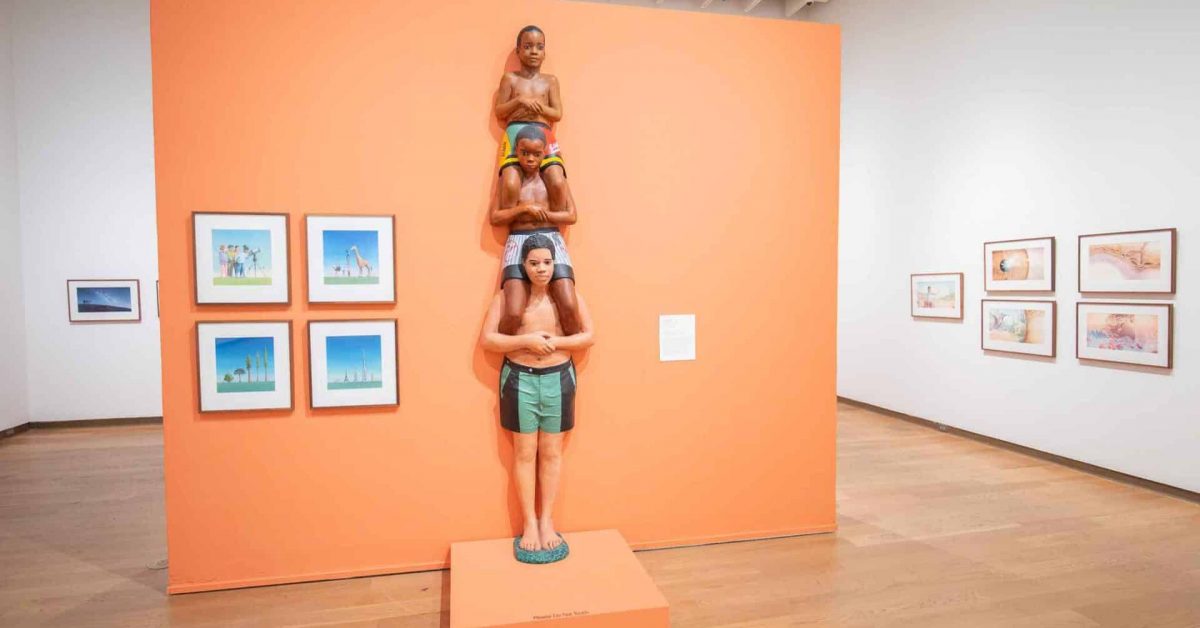
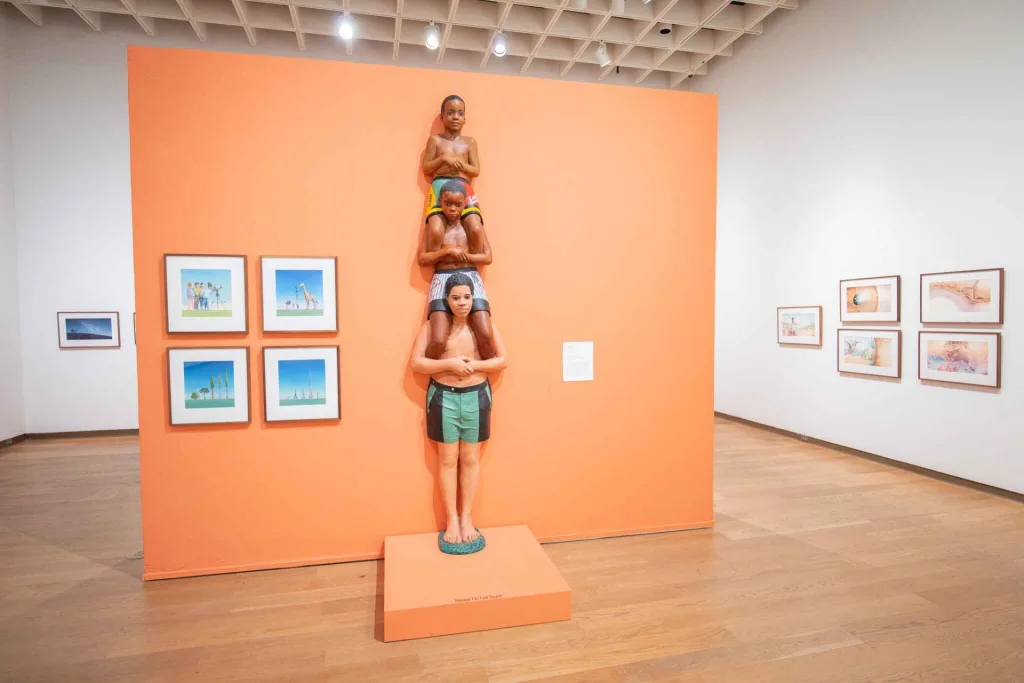
The Orlando Museum of Art presents its latest awe-inspiring exhibition this year, “Jason Chin: Your Place in the Universe,” which champions the notion that visual storytelling makes the connection between art and science more palpable. Among the many paintings in the exhibit, anyone can have their own ‘aha!’ experience learning about art in STEM education.
The ability to paint, tell a story, and render an illustration helps make STEM, from astronomy, geology, ecology, and even particle physics, easier to comprehend, fun to engage with, and accessible for any age.
This season, OMA invites individuals, families, educators, and students to explore the connection between art and science. From this experience, we discover that visual narratives are the ideal way to inspire inquisitive minds and encourage new endeavors.
The Power of Visual Storytelling in Science Education
Why is the concept of science so much easier to digest through pictures? Because visual narratives provide learners with a foothold. Color, shape, size, and order help sort through emergent details.
STEM education research demonstrates that narrative and visual forms of science increase motivation, confidence, and understanding, particularly for challenging or non-tangible subjects. Even the National Science Foundation points out that videos and photography/design decisions facilitate more profound comprehension and greater scientific literacy.
Jason Chin’s books exemplify this approach to both narrative and images. Chin’s Redwoods starts with a subway ride that transforms into a time-traveling adventure through a seaside forest, using size comparisons and cutaway images to convey the biology of the tree and the physics of the forest.
His Grand Canyon employs gatefolds and vignette cutaways to follow layers and time, integrating geology, biology, and paleontology into one discernible narrative. The cumulative effect is complex yet compelling. Science makes sense by way of sequenced images that readers can reexamine and discuss.
Jason Chin’s Unique Approach to Art and Science
Chin anchors his work in meticulous research and on-site investigations, then stages vignette compositions that make the scientific inquiries feel familiar. His accolades suggest such precision. For his work on Watercress (by Andrea Wang), he won the 2022 Caldecott Medal for picture book illustration, indicating the importance of picture-led story efforts in youth education.
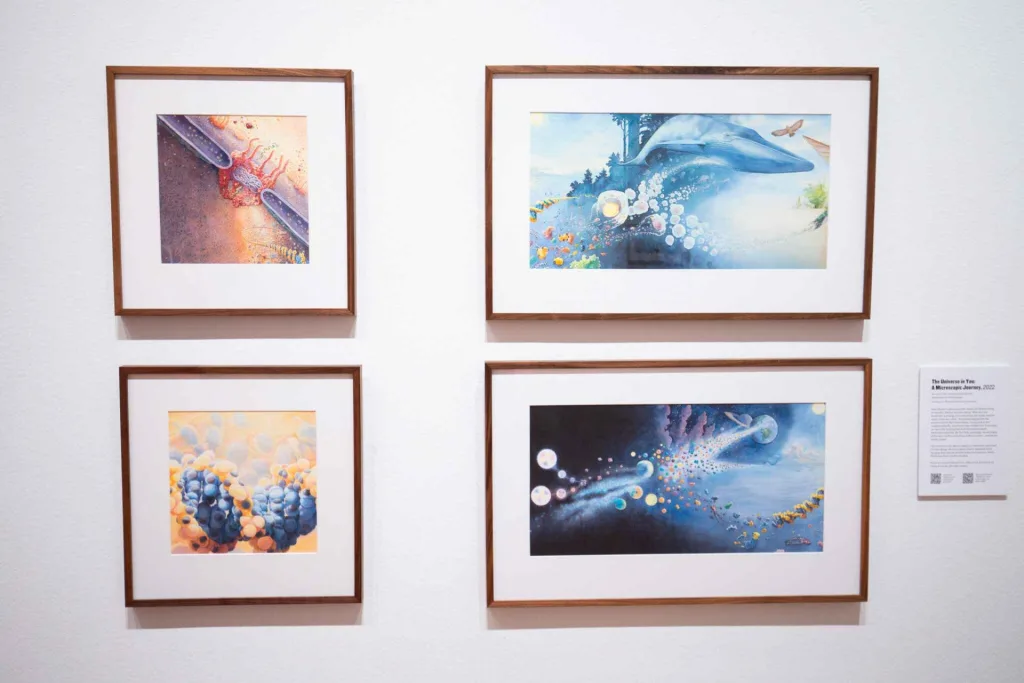
Over his illustrious career, he’s taken readers underwater to a coral reef, through the treetops of redwoods, across the Grand Canyon and Galapagos Islands, and most recently through the realms of the universe and microscopic reality with Your Place in the Universe and The Universe in You.
OMA’s exhibit companion pieces showcase the scientific themes explored: from gravity to the particles that create who we are. Chin has described his process simply: “I look for two things…a topic that fascinates me and a story to go with it.” That marriage of scientific accuracy and compelling narrative is what makes for a lasting impression.
Or as he told Time for Kids, “The closer you look at the universe…the more things look the same…we’re all connected to the universe.”
Why Museums Are Perfect for STEM Learning Through Art
Museums allow for families and classrooms to pause, enjoy, and ask questions together. In a museum gallery, size is relative, timelines stretch across canvas, and interdisciplinary connections abound. For the young inquiring mind, this means diverse entry points: a chart to interpret, a mosaic to investigate, a title card to consider, or a hands-on suggestion.
OMA embraces this notion. With a mission focused on education and community involvement, this museum creates exhibits and opportunities where art facilitates inquiry across subjects, inclusive of science.
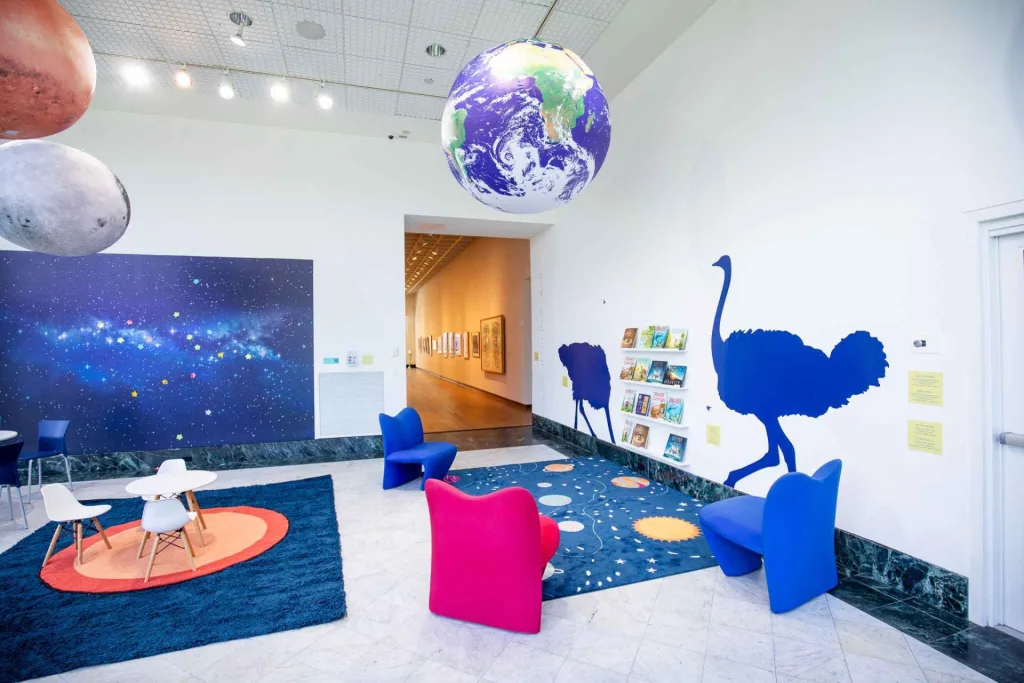
You and your family can complement a trip to Jason Chin: Your Place in the Universe with a guided tour or a studio activity from OMA’s Learn offerings, and keep exploring at home with images, drawing, and student-created diagrams as learning resources.
Inspiring Children and Families Through Interdisciplinary Learning
Children relate to stories, including the characters, setting, and sequence, before they’re ready to employ such vocabulary formally. Visual storytelling establishes that anecdotal connection but applies it to STEAM concepts: scale, systems, cause and effect, structure and function.
Families looking at Chin’s paintings can discuss where a story starts, what imagery indicates scientific approaches, and how one page “leads” into another. This supports national standards for arts education relative to social-emotional learning and academic development: the arts promote focus, compassion, and determination, skills that later support science learning.
“The Orlando Museum of Art is honored to present the picture book exhibition, Jason Chin: Your Place in the Universe. This exhibition is incredibly cross-curricular, overlapping art, science, history, and language arts,” said Molly Lawson, Associate Curator for Community Engagement at OMA.
“The illustrations of Jason Chin are heavily researched and expertly created through the delicate, and often challenging medium of watercolor. It is our hope that this exhibition will inspire audiences of all ages to not only be curious and creative, but to explore how they can continue Chin’s practice of combining art and science within their own universe!” said Lawson.
For example, a child may illustrate the relative size of galaxies after seeing a NASA cosmology spread or compare a scene with coral reefs to a labeled diagram of a food web. OMA’s family-friendly offerings allow for these discussions to come to life in the galleries and beyond.
Bringing Art-Based STEM Education Into the Classroom
Teachers don’t need to have a studio at their disposal to implement Jason Chin’s visual techniques. For the classroom, try these ideas for including art in STEM education:
- Scaling Stories: Have students create a three-panel comic that scales outward (e.g., cell to tissue to organism) or scales inward (e.g., city to neighborhood to classroom) and title each frame with a predicted measurement.
- Story + Diagram: Create a labeled diagram (e.g., parts of a flower, layers of rock) and add a brief, captioned story that shows what happens over time, but requires an understanding of a process.
- Notes Integration: Encourage students to combine their written notes with sketches or diagrams of their scientific observations. The relationship between images and notes can help the concepts stick better.
- Museum Labels: After an outdoor observation, have students make a “museum label” for their own drawing, noting the title, scale, medium, and one scientific observation.
Check out sites like Edutopia for more STEM educator resources and reliable lesson plans. Many come with visual models, data, or experiments created for use within K-12 classrooms, as well as integrated arts projects and guides to project-based learning in science and engineering.
Visit OMA to Experience Jason Chin’s Work
Jason Chin: Your Place in the Universe is on display at the Orlando Museum of Art from September 5, 2025, to November 30, 2025. Original watercolor illustrations on display from nine titles by Caldecott Medalist Jason Chin, with accompanying interpretive materials, reveal Chin’s research-based picture book approach and whimsical sense of scale from microscopic to universal proportions.
View your place in Chin’s universe and discover how the art makes the unknowns of the universe exciting through STEM-based storytelling accessible to all.