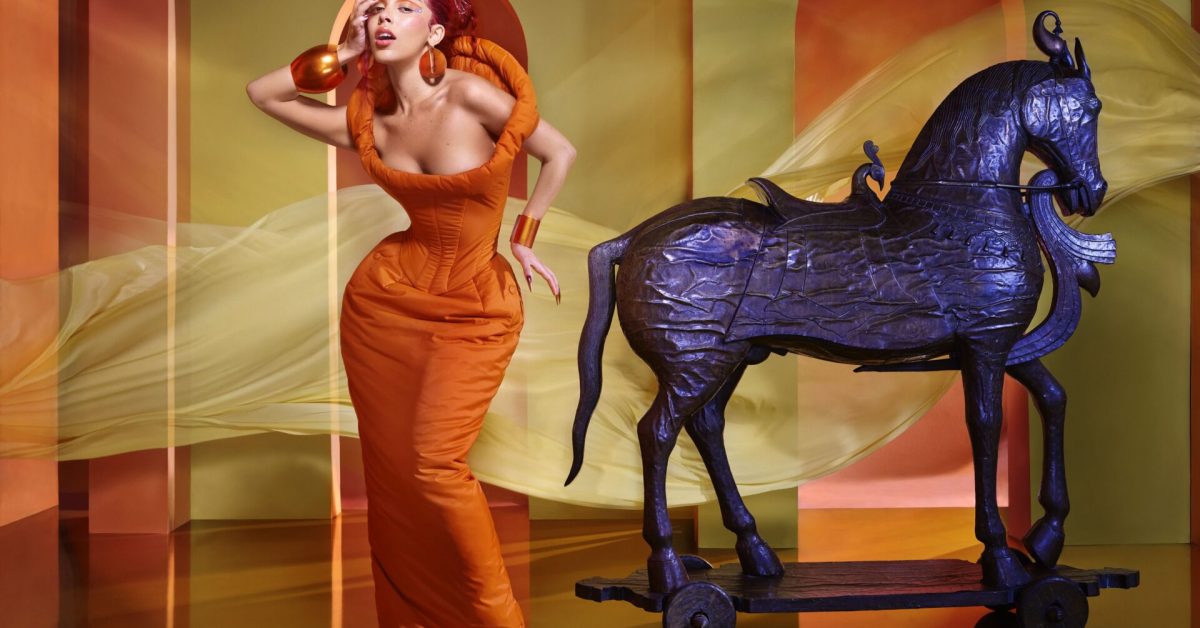
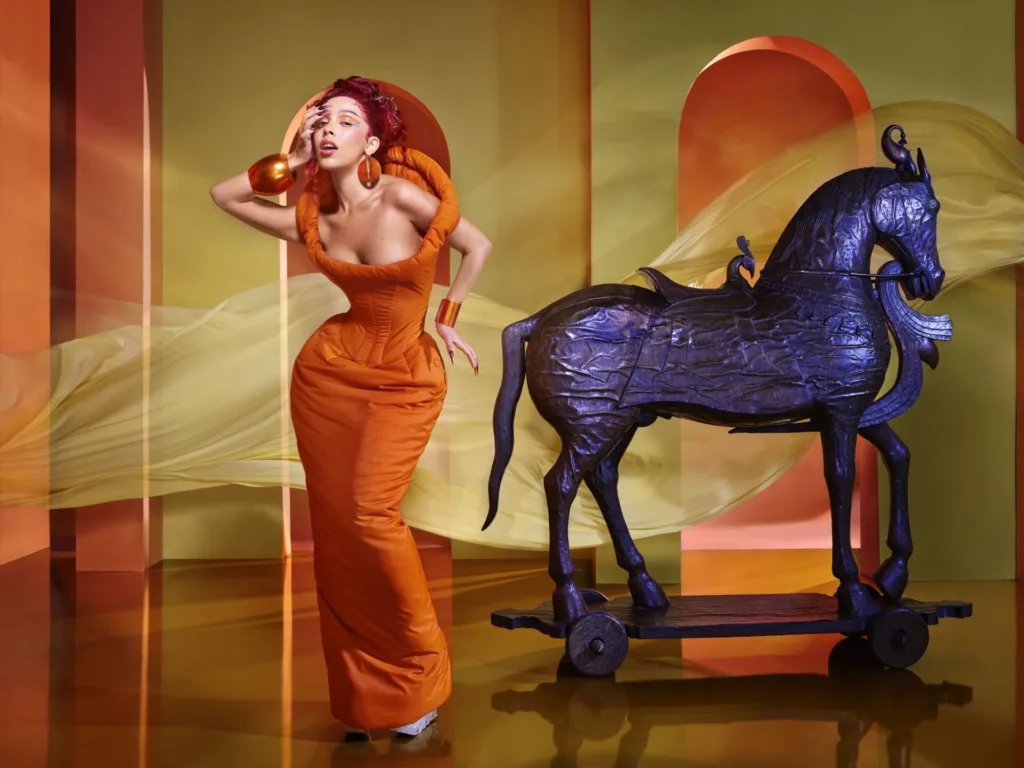
The recognizable shape of Doja Cat in a striking orange dress, frozen in mid-gesture, one hand on her forehead, next to a dark wheeled horse sculpture. Dramatic arches glowing with orange light fill the background, and a flowing piece of yellow ribbon flies through. The lacquered floor reflects her pose amid all the colors. The set looks constructed, but it has the feel of a shot taken mid-beat; a poignant moment within the action.
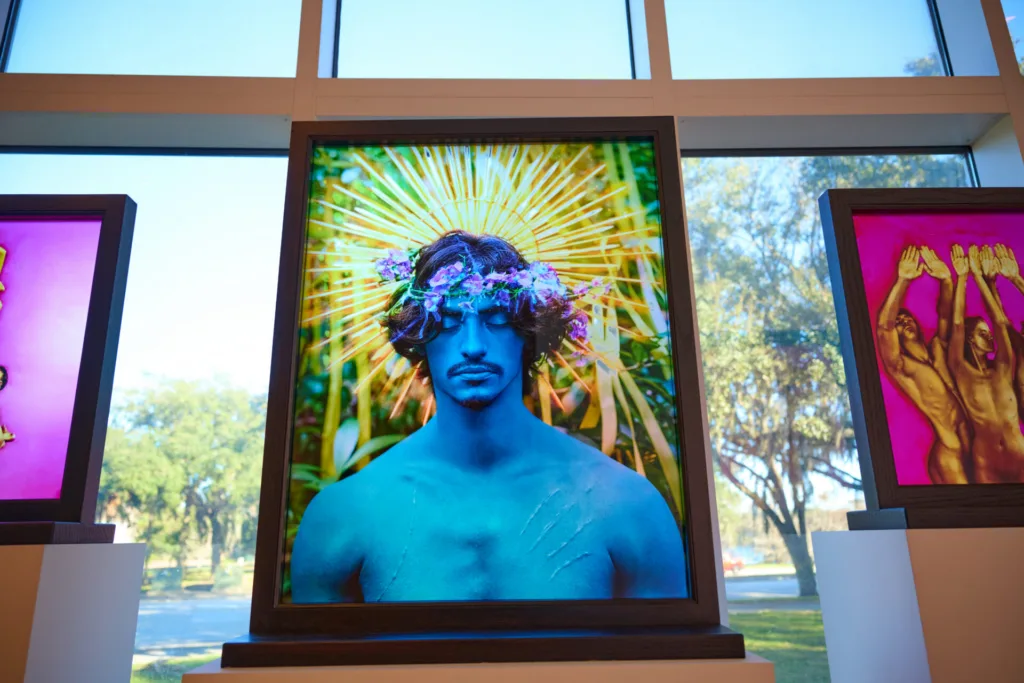
David LaChapelle: As The World Turns opens at the Orlando Museum of Art on January 31, 2026, covering more than 100 works spanning four decades. The exhibition is on view until May 3, 2026. David LaChapelle: As The World Turns is the largest U.S. museum retrospective of the visionary photographer and director, spanning his early works depicting religious figures and editorials to his celebrity portraiture and allegorical works that ponder themes such as spirituality, environmental fragility, and transcendence.
The Staged Encounter: How LaChapelle Builds a Live Moment
LaChapelle treats the studio as a stage and chooses sitters who look at home in the worlds he’s created. He scripts scenes, builds sets, and choreographs movement, giving sitters actions rather than poses, and working with them as active collaborators. It all builds to a timed shot and a climactic gesture. On some shoots, he plays music to establish tempo and loosen bodies, so that the image contains rhythm as well as form.
The elements work together in plain view. Light carves shadows and forms bodies. Color establishes mood. Reflective floors, neon, water, or smoke serve as secondary performers channeling energy through the frame. Backgrounds and props frame the subject, so that the portrait feels like an ongoing exchange rather than a frozen record.
OMA’s presentation makes the process evident. Hand-painted negatives, film-based media, and behind-the-scenes footage reveal how staged actions become finished prints. The galleries allow you to digest the full tableau, then get up close to study the gesture, texture, and detail without losing the sense of flow.
“So much of David’s work is bold and visually striking. Playing on the intensity of the works, the flow will bring intimate early portraits and preparatory sketches alongside vivid celebrity photographs and large-scale allegorical tableaus, including a world-premiere piece newly commissioned for a gallery in Milan. This contrast is intentional, encouraging visitors to move between intimate details and visually dramatic works.”
– Chief Curator Coralie Claeysen-Gleyzon
Eyeline, Breath, and Micro Movements: The Body as Performance
Small adjustments on set alter our reading of a pose. A shifted eyeline alters power and connection. Breathing adds tension in the rib cage and neck. Balance through the hips and feet indicates whether a pose is grounded or about to change. Photography often captures ‘the moment before the moment’, with thought and action occupying the same space.
In Doja Cat: Gone with the Wind, Doja Cat leans into the frame and gazes up past the camera with one hand pressed to her forehead. The orange set, the yellow fabric sweep, and the wheeled horse prop imply the pose is a staged beat held in position just before the action of the film to come.
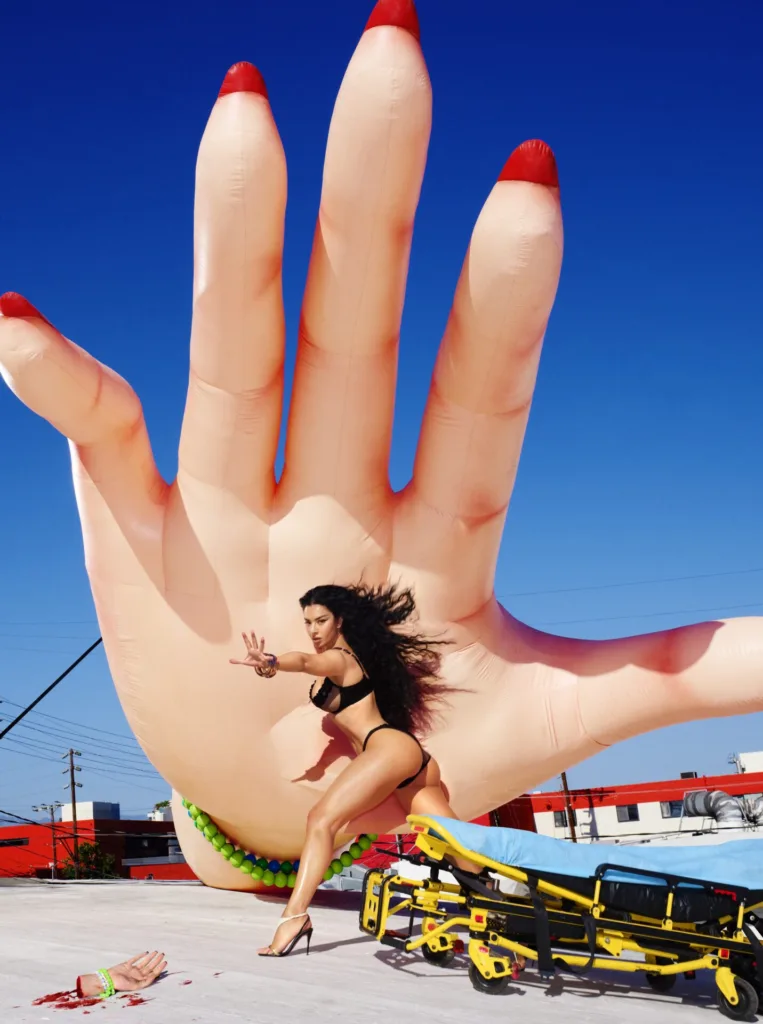
Charli XCX’s portrait for New York Magazine feels wider in scope, as she lunges on a rooftop in black lingerie with her arm thrust forward, hair blown back, framed by a giant inflatable hand with red-tipped nails, a yellow stretcher, and a detached hand prop on the ground.
The two images use performance in different ways. Doja’s portrait builds a tidy sculptural stage; the background keeps the image neat and formal, so her gesture reads like a perfected pose in a scene. The Charli image undermines that neatness by design: the frame feels louder and messier, with the bright props and hard blue sky leaning towards parody. Doja’s image goes for glamour and composition, while Charli’s goes for surprise, scale, and visual puns.
Sound and Rhythm on Set: The Unseen Elements in the Final Frame
A LaChapelle portrait does not begin muted with people frozen in the moment. His working methods often involve a set in motion with music playing as the scene unfolds and the sitter is engaged in real time. Sound is important to setting the tempo of the space, and the rhythm can impact how someone presents themselves physically.
Tempo can affect pacing. Leaning into something, lifting a shoulder, and even letting your eyes gloss over can all be influenced by music that asks for more in that moment. A beat can elicit a bolder expression, a softer interaction, or even a cheekier engagement. All of those micro elements build up over the course of a portrait session. It is not just a costume or an accessory that stands out, but a person participating in and responding to a moment in time.
That’s what makes a final print “alive”. Even stripped of sound, tempo can be felt in the poses and split-second decisions that are locked in when the shutter is pressed. A LaChapelle photograph captures not just a gaze but the energy that led to it.
Selecting the One Frame: Why Certain Images Feel Like Performances
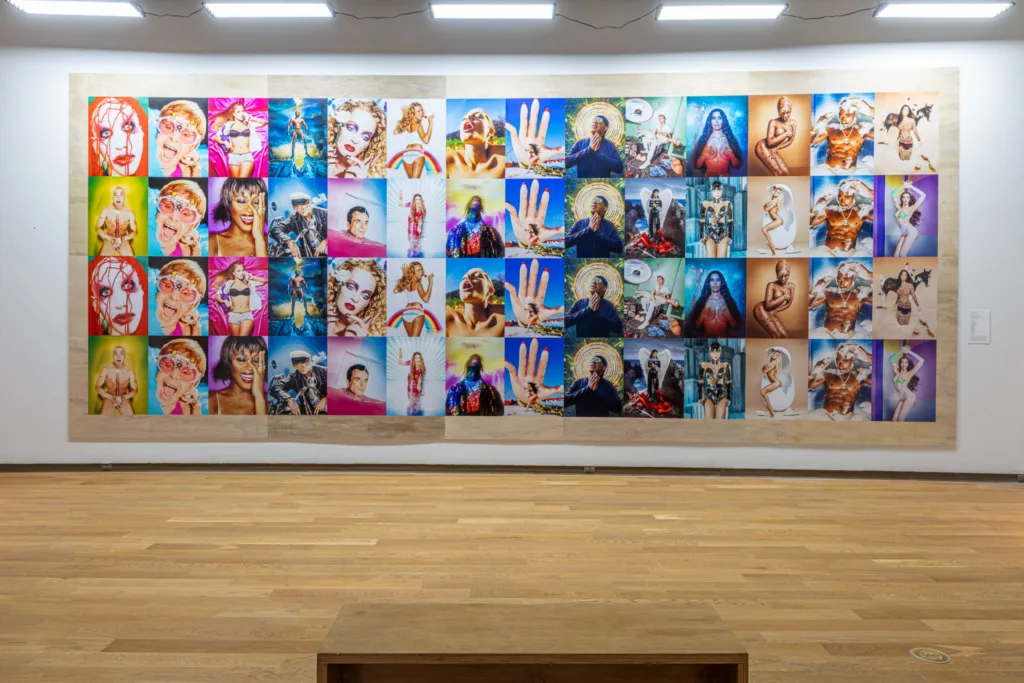
LaChapelle doesn’t stop at one take. He builds the scene out and then shoots while the sitter shifts and experiments to find the next beat. Every slight adjustment to the glance and angle of the hand and body leads to a unique balance. The edits happen after the energy has been explored in every way possible.
The chosen frame is always the climax of the performance. Action, gesture, gaze, and set all come together in a way that makes you feel the energy is about to break through the frame. The final result is not just a photograph, it’s an event.
Printing is just as important to lock in the feeling. The color choices work to keep the mood of the set. The finish reacts differently depending on how the light hits it; matte absorbs, glossy reflects. The size of the print changes how the viewer engages with it, warping the scale into a larger-than-life experience or an intimate examination.
When OMA gives the final art the proper space, sight lines, and cadence between prints, the installations across the gallery begin to feel like you’re inside a motion picture.
How to Look: A Short Viewing Practice for Visitors
When you first enter the exhibition, there’s a lot to take in, but there is no “correct” reading of LaChapelle. His images create complete worlds, and your eye will want to leap from one detail to the next. If you want to be more intentional with your viewing, pick a photograph, spend some time with it, and let its story unfold in your mind.
- Start up close. Begin with the body. Where is the weight? What do the hands do? Observe the jaw, shoulders, neck, and hands. These are often the most emotional elements of a moment.
- Step back and look at the whole scene. Treat the image as a stage photo. Where does the light draw you in? What does color do for the mood? How do props and space point you back to the subject?
- Imagine the second before and after. Think about what happens in the second before the shutter click and right after. Does the pose feel like a buildup? Does it feel like a release? This way, the scene feels alive like a moment in a larger event.
- Compare two portraits. Pick two works that feel different from each other. Look for variations in eyeline, body, and balance. Then describe the differences in subject, setting, and tone you see across the two works.
After completing these exercises, you should begin to see this work as the product of many decisions and not just one “look.” You may also find that you can talk about it more readily because you have found something specific to discuss.
If you are with someone else, compare what you both see before looking at the label. The conversation often becomes the best part of the experience.
“I hope visitors experience the exhibition as a meeting ground, something that brings people together rather than pulling them apart. LaChapelle’s work can be provocative, engaging with religion, sexuality, and the body unapologetically, yet it is ultimately rooted in empathy, understanding, and beauty.”
– Chief Curator Coralie Claeysen-Gleyzon
Preparing to Experience the Exhibition at OMA
David LaChapelle: As the World Turns is the largest U.S. museum retrospective of his work, opening at the Orlando Museum of Art on January 31, 2026. As the World Turns will bring together over 100 works and be on display from January 31 to May 3, 2026.
The scale and physicality of LaChapelle’s portraits demand to be seen in person, experienced with the buzz and sense of collaboration from other art enthusiasts throughout the installation. In the galleries, you can see the print at its true size, then get up close to appreciate what is packed into each image: the expressions, styling, lighting, and elements that tie it all together.
Get ready to see the show by checking out the David LaChapelle: As the World Turns exhibition page and planning your visit to OMA. If you’re planning to come by more than once, a single OMA membership gets you year-round admission, discounts on programming and merchandise, and helps support the museum’s future.
Acknowledgment: OMA Staff thanks LaChapelle Studio for contributions and Coralie Claeysen-Gleyzon for curatorial insights.