

By: Coralie Claeysen-Gleyzon
The Dr. James Cottrell & Mr. Joseph Lovett Chief Curator, Orlando Museum of Art
David LaChapelle’s images breathe, pulse, and exult with an unexplainable élan; an infusion of life so intense it feels almost mythic. They could be best described as being imbued with anima, in the Latin sense, a soul and a vital breath that elevates a LaChapelle photograph from representation to icon. Saturated with color and loaded with emotion, his photographs speak in a hyperbolic visual language full of superlatives. Excess, beauty, desire, faith, and spectacle are all rendered with lyrical intensity. Each image bears the “LaChapelle touch,” an inimitable style in which artifice and truth coexist and where illusion, instead of obscuring meaning, magnifies it tenfold. It’s easy to forget you are looking at a photograph, as the image immerses you instantly in the drama, the theater, and the scene’s emotional charge.
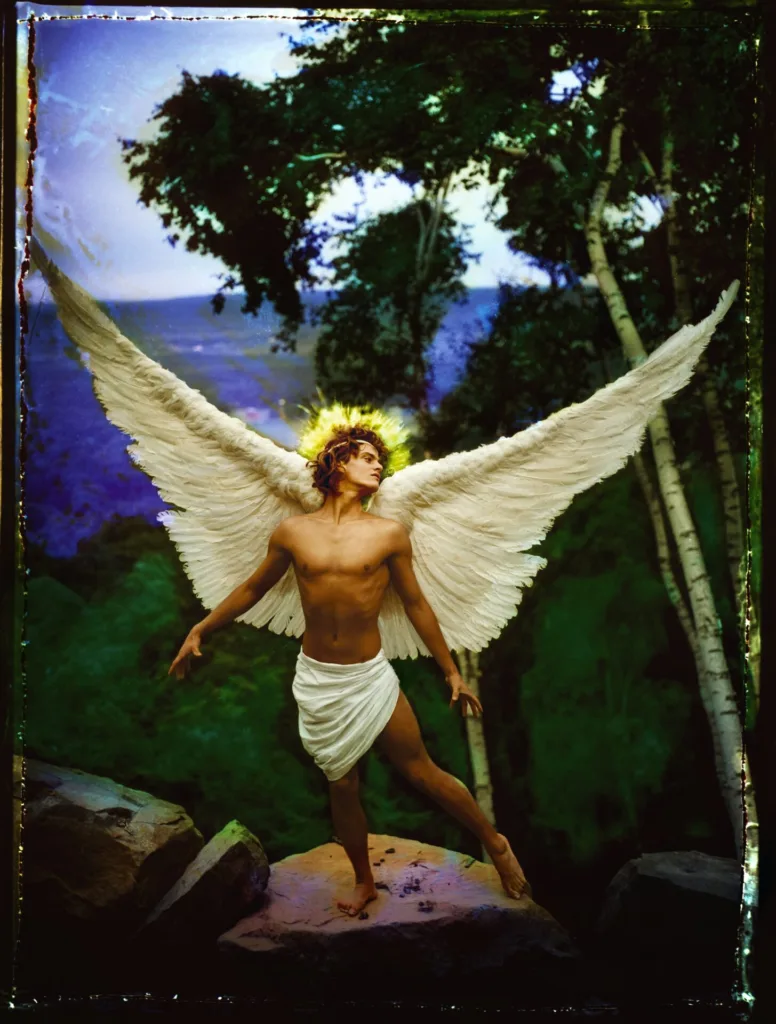
Like parables and allegories, LaChapelle’s images use a symbolic language in which archetypes, clichés, religious and mythological figures are deliberately intertwined. His visual language draws from a vast range of cultural references—high and low, sacred and profane—that span Renaissance art, Symbolist photography, Baroque exuberance, religious iconography, pop culture, music, literature, television soap operas and novellas, cult films, and advertising. Michelangelo’s Sistine Chapel frescoes and Botticelli’s idealized bodies, 17th-century Dutch Golden Age vanitas still lifes, Andy Warhol’s obsession with fame and commodity, and Georgia O’Keeffe’s sensuous natural forms all inform the artist’s practice. Reminiscent of Mannerism, LaChapelle’s figures often assume complex, elongated, and exaggerated poses that elevate the composition beyond realism. Sophisticated ornament and adornment coexist with classical nudity, denudement, and voyeuristic exposure; divine beauty is set against the messiness of human life. It is precisely through exaggeration, artifice, and extremes that LaChapelle reveals the truest nature of our humanity. His images remind us that human lives are imperfect and chaotic, standing in stark contrast to ideals of divine or manufactured perfection. His tableaux function much like Greek tragedies or Shakespearean plays: staged dramas that explore the full spectrum of human emotion, from ecstasy to despair, folly to Transcendence.
There is one certainty in LaChapelle’s practice: artifice is real, and the constructed worlds that surround us can reveal profound truths. Through an often-humorous critical lens, LaChapelle focuses on our fixation on appearance and superficiality, and interrogates consumerism, fame, and the spectacle of contemporary life. Celebrity culture is the modern pantheon; stardom, the sainthood of today. Fame is exalted, worshipped, consumed, and ultimately discarded in an endless cycle, like the wheat-pasted posters of his Vox Populi installation. Images of our idols receive their “fifteen minutes of fame” before being replaced; the very act of layering and possible decay of posters reveals the vulnerability and impermanence of our modern “saints.”

LaChapelle takes us to church both literally and figuratively, the moment we enter this exhibition. He integrates the language of spirituality devoutly and seamlessly into his visual practice. In one iconic rendition, Adam floats, high above the viewer, suspended within the museum oculus like a specimen in a petri dish; a newly made Adam, multiplied, incubated, perhaps cloned, that reimagines the biblical Creation of Genesis and art historical canon through a contemporary lens. In other instances, he offers magnificent, inclusive reinterpretations of the Holy Family, the Madonna, Jesus, and the Stations of the Cross. Throughout his work, spirituality and spectacle coexist. The human body becomes both an object of worship and a sacred site. This vitality extends to LaChapelle’s radical inclusivity. He was among the first to champion body positivity in contemporary photography, portraying plus- sized, genderfluid, and senior models with the same reverence that had historically been reserved for classical ideals. His celebration of the human form is timeless, reverential, and unapologetically provocative, dismantling preconceived standards of beauty while affirming the dignity of all bodies.
At the same time, his images operate as sharp social commentary. Color-drenched and enticing to the eye, they employ the tropes and tricks of advertising, sensational news outlets, and tabloids. Using what we call in French advertising l’accroche (the hook), their meaning must be readable within seconds, yet that immediacy is deceptive, often demanding a slower, deeper second look. Beneath the visual seduction lie somber messages about consumerism and consumption. LaChapelle scrutinizes contemporary society, exposing our manufactured worlds and their environmental consequences. His maquettes, built from disposable fast-food containers, transform make-believe into critique, implicating excess culture in ecological collapse and natural disasters.
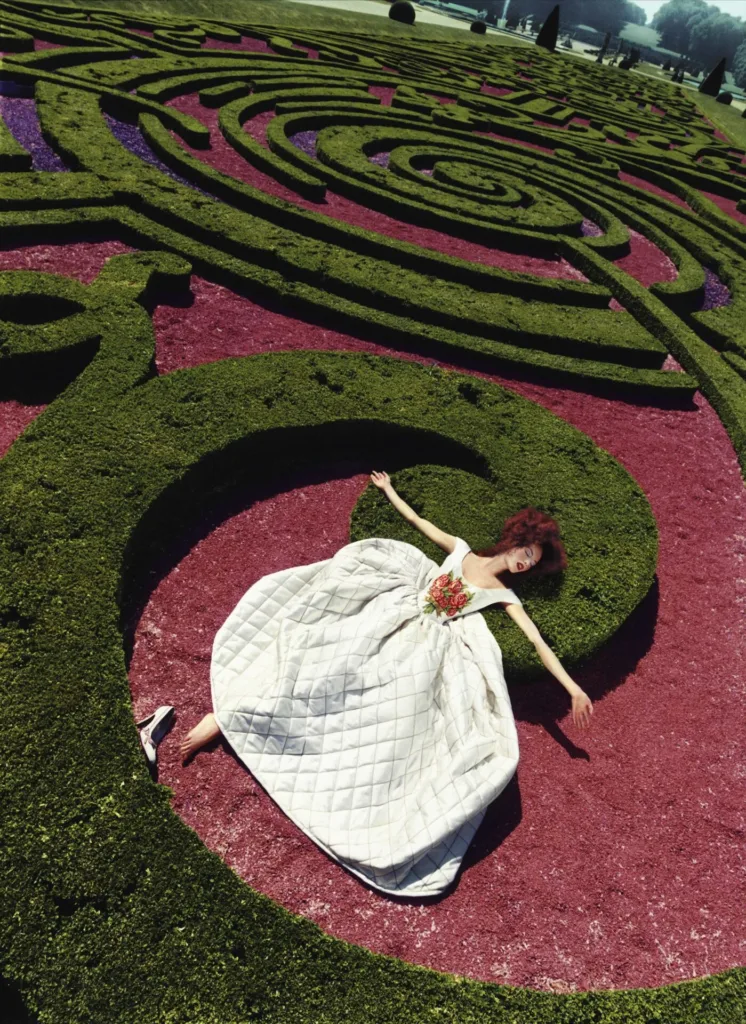
Duality is constant throughout LaChapelle’s work: creation and destruction, beauty and decay, humor and outrage. Nature appears both as solace and as a force in conflict with civilization, shaped by climate change due to human intervention. His classic still-life arrangements act as contemporary vanitas, meditating on the futility of earthly pleasures and the inevitability of renewal beyond transient human endeavors.
Behind the spectacle of his photographs lies an immense, often unseen labor. LaChapelle’s elaborate constructs are the result of intensive production processes that include preparatory sketches, collages, days spent building sets, and the well-oiled, orchestrated collaboration of dedicated teams grounded in craft mastery. The photograph is the final realization of an intricately staged world. In this sense, his artistic and commercial practices merge seamlessly. He has directed music videos, films, and advertising campaigns for some of the most prestigious recording artists, magazines, and fashion houses, including Christian Louboutin, while also turning his lens toward subcultures, as in RIZE, his early-2000s documentary on the clowning and krumping scene, which he was one of the first to ever document.
Over more than four decades, LaChapelle has created a visual universe that is bold, theatrical, and greatly empathetic to the human experience. He speaks in visual parables, metaphors, and allegories, inviting us to look into a mirror where our obsessions with materiality, appearance, and stardom reveal their instability and impermanence. Yet beneath the surface of illusion and artifice, raw humanity is to be found. The world according to LaChapelle is one of heightened reality and ecstatic escape, a place where images live and sing, and where the human experience, in all its luminous, excessive, and dramatic intensity, is exalted and encounters, even if just for one instant, the sublime.
