Contemporary art is known for its break with history in search of the new. Spend some time with the artists who are currently creating contemporary art, however, and you will find something else going on.
Part of what defines contemporary art is its turn to art history for inspiration: art that refers to earlier works, revives some of those age-old symbols, or uses techniques that have been employed throughout art history but are applied to modern art and subject matter.
The artists in OMA’s 12th Annual Florida Prize in Contemporary Art exhibit several of these efforts in their work, as described in the exhibition’s own curatorial essays on the artists, which indicate what to watch for to better understand their work.
Why Artists Look Backward to Move Forward
Artists engage with history in a handful of ways. Some choose to quote another artist’s specific image. Others work with a symbol that has stood the test of time. Some adopt an entire art movement. And others appropriate an image or art style to make a commentary on the history of that art.
None of these methods require reverence from the individual artist. Rather, the artist may quote another painting to pay homage to it, subvert its message, interrogate it, or all of these at the same time.
Revisiting a Specific Painting
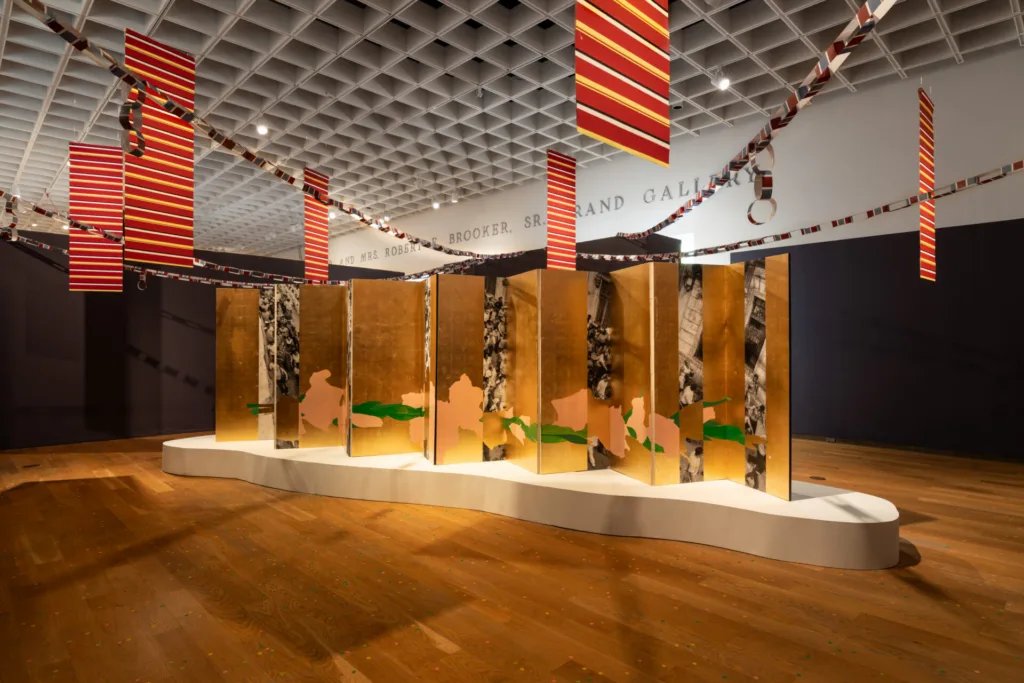
The clearest example of an artist responding to one specific historical painting is on view right now at OMA. As Coralie Claeysen-Gleyzon, OMA’s Chief Curator, writes in her essay on the artist, Francisco Masó’s The Coronation of Gladiolus (2026), elements of the folding screen, such as the gold leaf and narrow vertical paneling, echo the composition of Jacques-Louis David’s The Coronation of Napoleon (1805-1807), one of the most recognizable images in Western painting.
David’s painting depicts a moment after Napoleon has already crowned himself emperor: he is shown crowning his wife, Josephine, as empress, before the assembled court. Masó replaces the imperial coronation with the Damas de Blanco, a group of Cuban women, wives and relatives of imprisoned political activists, marching silently in white while holding gladiolus flowers.
This work is currently on view as part of the 12th Annual Florida Prize in Contemporary Art, OMA’s exhibit for contemporary artists from across the state.
Reviving Old Symbols: Vanitas and Memento Mori
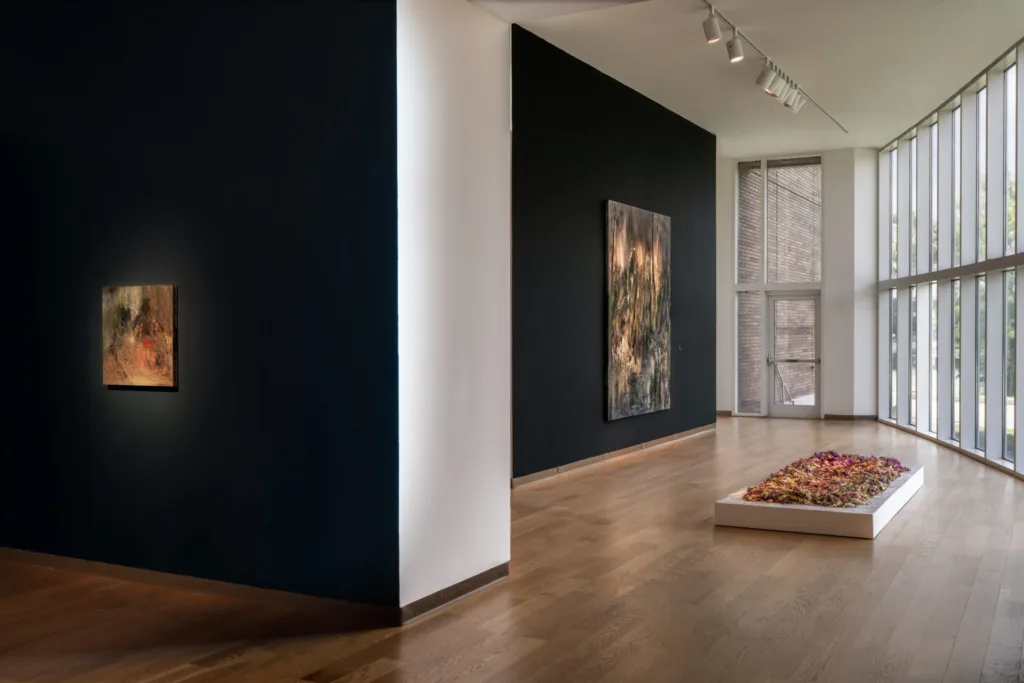
Some artists go even further back to the symbolic age of art. For instance, Katherine Page, the Associate Curator at OMA, explains in her essay on the artist Ema Ri that their floral still lifes are inspired by two traditions in art history: Baroque vanitas paintings and Roman memento mori art.
Vanitas artwork typically depicts luxurious items such as flowers, musical instruments, and hourglasses to convey the transient nature of beauty and pleasure. Related to vanitas art is the idea of memento mori, or art that depicts objects and symbols, such as skulls, extinguished candles, or wilting flowers, that serve as reminders of humanity’s mortality.
Ema Ri’s art uses dramatic floral imagery of seedlings and blossoms to depict themes of grief and the release of attachments. Additionally, the painter uses styles and elements of Tonalism and Impressionism to pay homage to those schools of thought and depict the life cycle of the flower in her paintings.
Picking Up a Movement’s Toolkit
Rather than referencing a single image or symbol in their art, some artists adopt techniques from an entire art movement and translate it into contemporary works.
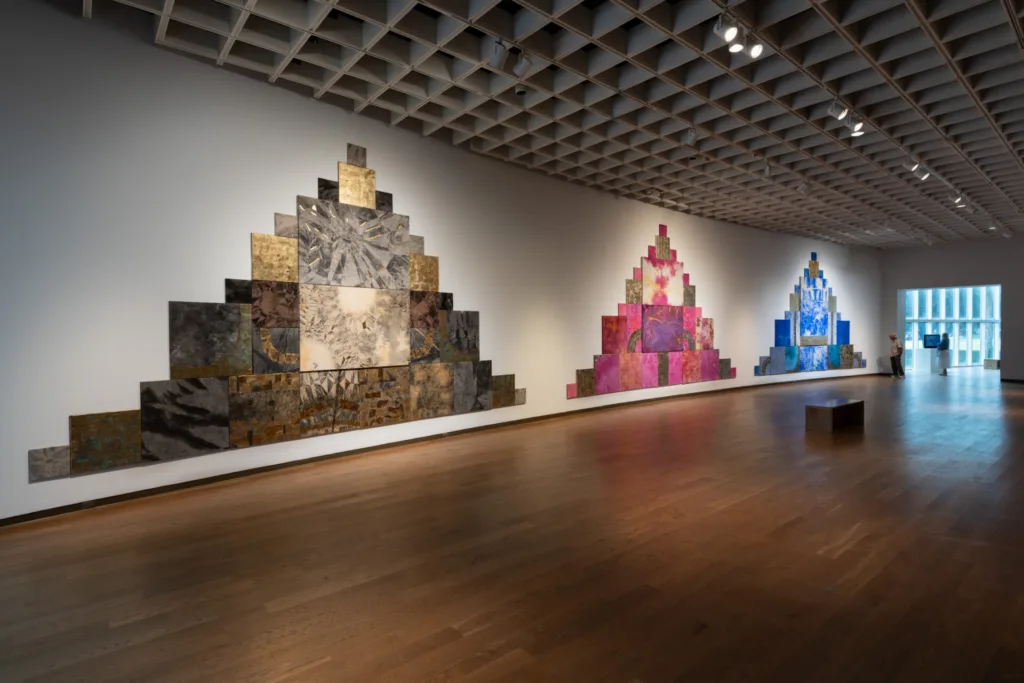
Broad art movement influences can be seen in the work of Cuban artist Masó. His shirt-pattern paintings, extracted from documentary photographs of Cuban state security agents, are rendered as geometric abstractions that recall Hard-edge painting, the mid-century American style defined by sharp lines and flat, precise color fields. Art in OMA’s collection also includes works by artists such as Robert Rauschenberg, whose work incorporated both abstract and Pop Art elements and similarly used found and appropriated imagery as raw material for new works.
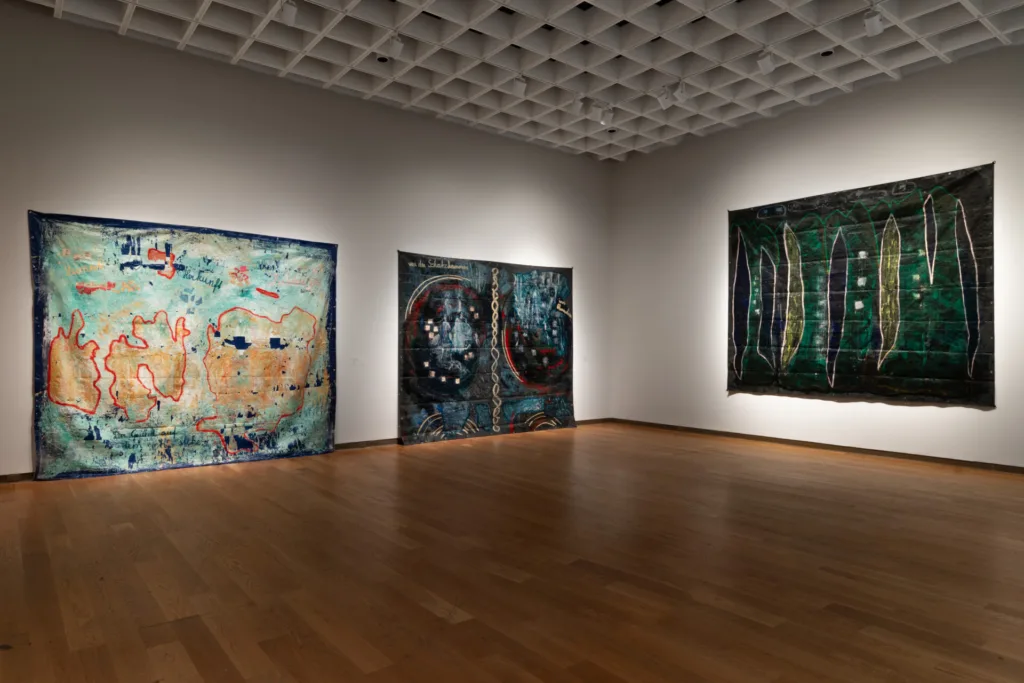
Danish-American artist Mette Tommerup is known for her massive paintings inspired by the Color Field art movement, which was popular in the mid-20th century and focused on using color as the main subject of the painting. She takes that tradition even further, physically dragging her canvases across sand, rock, and ocean water, letting the elements alter the surface. In this way, Tommerup also draws on the Italian Arte Povera movement, which used humble and unconventional materials, as well as Phenomenology, an art movement that sought to depict direct, lived experiences and avoided abstraction.
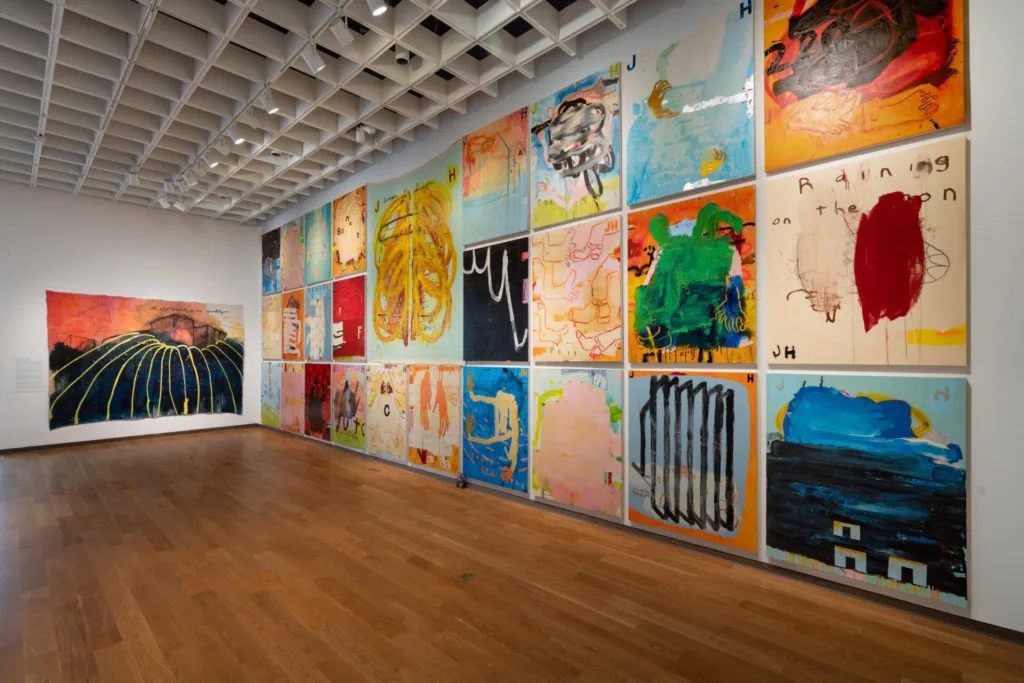
Jason Hackenwerth is another artist whose work draws from different art movements. As Claeysen-Gleyzon writes in her essay on the artist, his work is rooted in Abstract Expressionism, another art movement prominent in the mid-20th century that focused on the physical act of painting and its relationship to the subject (rather than the representation of that subject).
Hackenwerth’s work also incorporates elements of action painting, a technique commonly associated with Jackson Pollock’s approach to gestural painting. Hackenwerth layers expressive marks and paint “skins” that repeatedly obscure and reveal the surface beneath, echoing action painting’s emphasis on process as much as image. For a more detailed look at Understanding Abstract Art, from Abstract Expressionism to Color Field and beyond, OMA’s guide unpacks each of these art movements in more depth.
Photography in Conversation with Its Own History
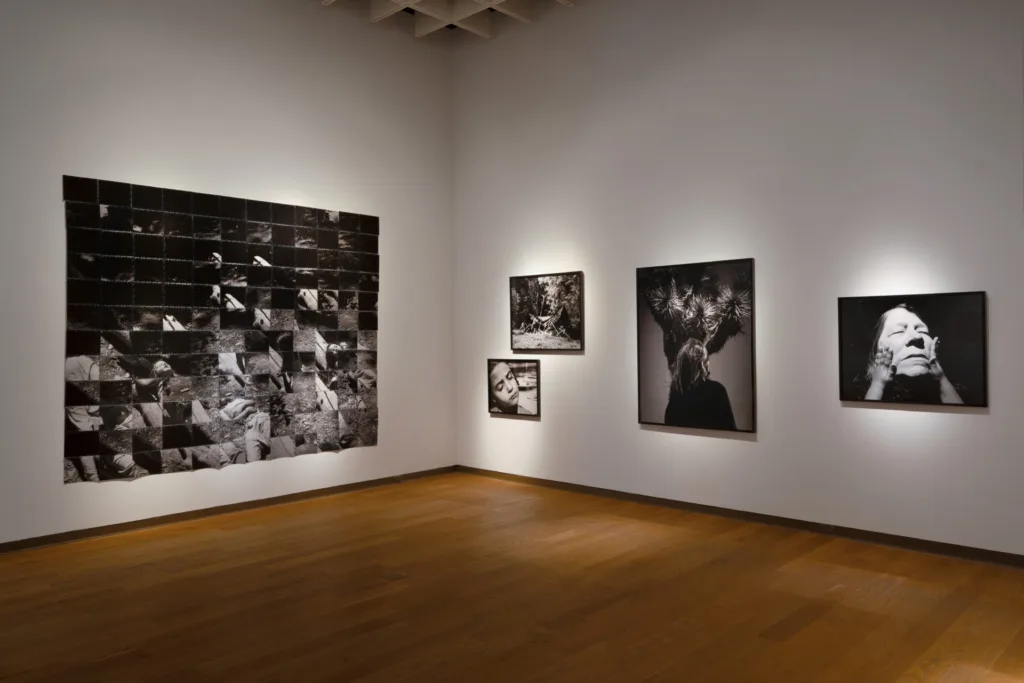
Beyond painting, historical references can also be found in photography. As discussed by Claeysen-Gleyzon in her essay on Rose Marie Cromwell, many of Cromwell’s black-and-white photographs reference other photographers, such as Ansel Adams and Robert Frank.
Documentary photography throughout much of the past century has been used in various ways to observe, and often survey or classify, the world from an outside perspective. Cromwell, however, uses photography and black-and-white film to create work that explores memory and more intimate elements often omitted in documentary-style photography. Cromwell’s work suggests that “historical” art takes many forms beyond painting, and that photography as a medium also has its own history to carry forward.
Ancient Techniques as Contemporary Language
Two more artists push the definition of “historical” beyond the Western painting tradition entirely, focusing instead on techniques passed down from generation to generation and across the globe.
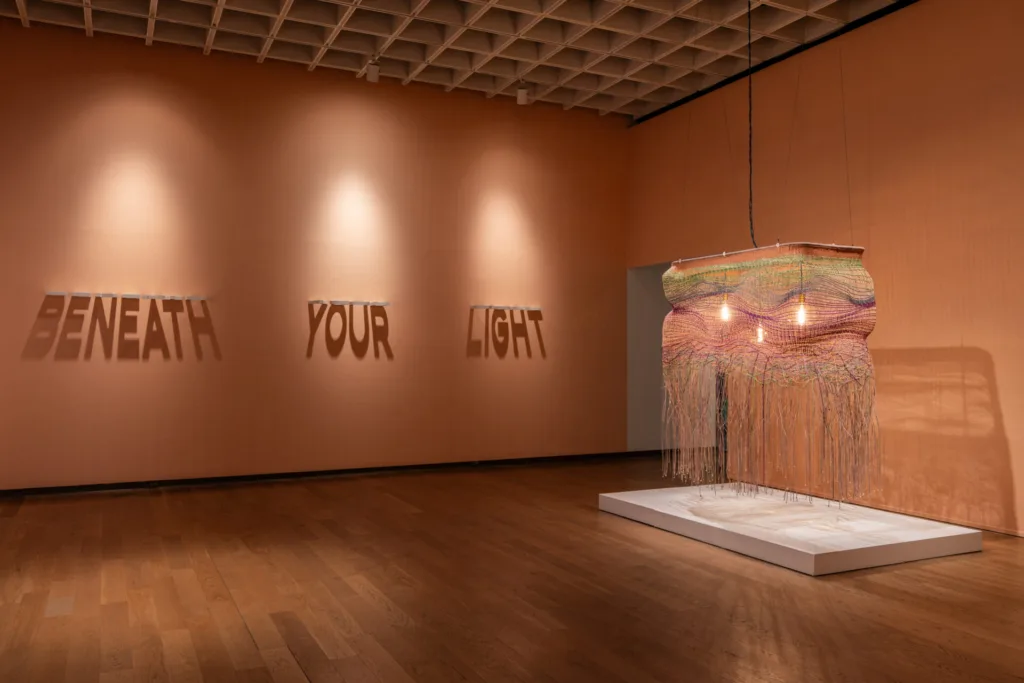
Jessy Nite utilizes traditional basketry and knotting techniques found in cultural artifacts of textile art objects throughout history. As Katherine Page notes in her essay on Nite’s work, these sculptural pieces have an eternal quality associated with the earliest archaeological discoveries that contain both visual and linguistic representation of the cave. Nite’s art combines traditional basketry techniques with her own methods of knotting to create these sculptures.
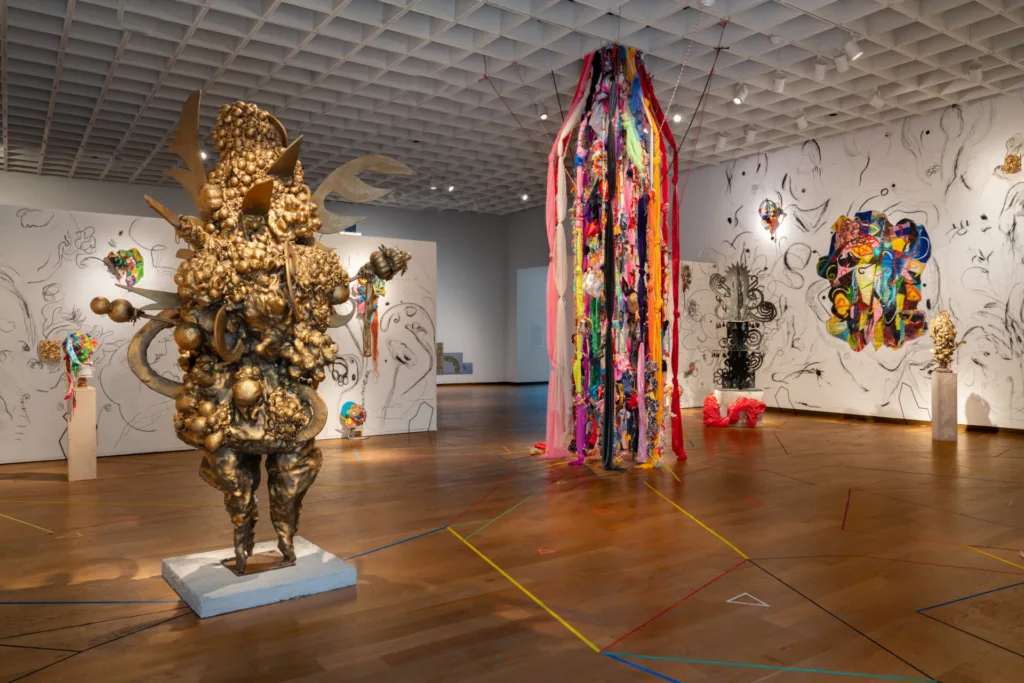
Charo Oquet’s sculptures are informed by two different sculptural traditions of African origin. Page writes in her essay on the artist that one of Oquet’s influences is the Nkisi Nkondi tradition of the Kongo people, who use these sculptures to encourage positive actions within their communities. Another influence upon her work is Paquet Kongo, which are sacred bundles used in Haitian Vodun to encourage healing. Oquet translates these traditions into contemporary sculptural forms using metal, nails, fabric, and sequins.
How to Spot These References on Your Next Visit
When you know what to look for, historical references are all around you in the contemporary art world. Here are a few questions you can ask when viewing any work of contemporary art:
- What technique or material is the artist using, and where does that technique originate from?
- Does the composition, pose, or framing appear to be inspired by another work of art that was created in an earlier period of time?
- Are there any symbols within the work of art that may have some historical significance?
- Is the artist working within the parameters of a historical art style or breaking from it?
For a broader set of strategies for viewing any work of art in a museum, OMA’s guide on How to Appreciate Art can help prepare you for your next museum visit.
See It in Person at OMA
The clearest way to see these connections firsthand is in the gallery. OMA’s current exhibitions regularly feature artists in direct conversation with art history, and the 12th Annual Florida Prize in Contemporary Art remains on view for visitors who want to see Masó’s Napoleon reference, Ri’s floral vanitas, and the rest of this year’s cohort in person. OMA’s permanent collection offers further opportunities to trace these same historical threads across different eras and media.
Plan your visit to see how today’s artists are reworking art history’s symbols and styles, or become a member for ongoing access as new exhibitions continue this conversation.
FAQs About Historical and Contemporary Art
What does it mean when contemporary art “references” historical art? An artist intentionally adopts a composition, symbol, technique, or movement from a past era and reinterprets it to express something fresh, using homage, subversion, or reinterpretation instead of mere imitation.
What is memento mori in art? Memento mori, meaning “remember you will die” in Latin, is an artistic tradition prominently seen in Baroque vanitas still lifes. It employs symbols such as wilting flowers and skulls to remind viewers of mortality. Today, contemporary artists continue to utilize these symbols, frequently incorporating them into paintings or floral still-life compositions.
What is appropriation art? Appropriation art, also known as art appropriation, involves artists deliberately borrowing or reworking existing images, styles, or objects (whether from art history or popular culture) to generate new meanings within the context of their new work.
Why do contemporary artists use techniques from historical art movements? Adopting an older technique or movement allows an artist to link their work to a broader visual tradition while exploring a new theme, such as using Hard-edge painting’s geometric precision to depict a contemporary political issue.
Where can I see contemporary art that responds to art history in Orlando? The Orlando Museum of Art’s current exhibitions, such as the Florida Prize in Contemporary Art, often showcase artists who interact directly with historical movements and images.